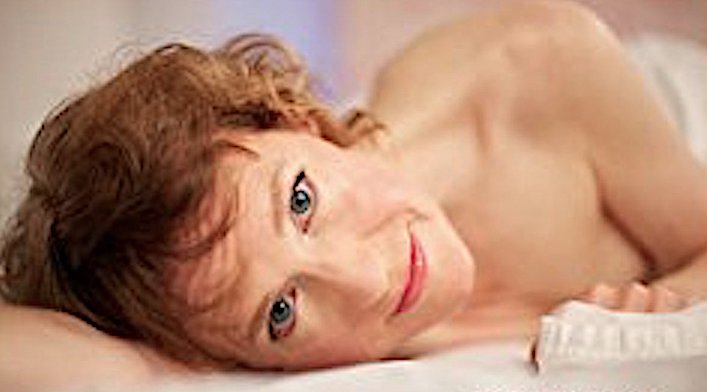
If you’re a fan of erotic fiction, you’re probably familiar with the incredible writing of Donna George Storey, where storytelling and scorchingly hot scenes combine in perfect harmony.
Donna tells us, “Ever since I can remember, I’ve loved the way a good story can transport me to another world, giving the magical sense of living another person’s life. I’d always been drawn to creating stories and characters of my own. I wrote a novella for my senior thesis in college, but then didn’t write creatively for another 14 years! In my mid-thirties, after a stint in academia and the birth of my first child, my urge to write creatively returned with a new intensity. I not only began to write with great passion, but began to read with a new eye and a new appreciation for the art and craft of storytelling.”
“Authors who impressed me at that time were women who had a confident and nuanced sensibility. Virginia Woolf’s To the Lighthouse amazed me for its keen insight into the magic of ordinary life and its effortless movement through the consciousness of varied characters. Muriel Spark’s The Prime of Miss Jean Brodie and Mary McCarthy’s The Group inspired me with their sharp wit and clear vision of the female experience within a male-dominated society. Their sensibilities and voices drove me to do the same, to the best of my ability — to report on the truth of the female experience, seeing the humor and the beauty in our lives.”
 “I found that my storytelling always turned to erotic themes, and felt ashamed to be writing “dirty stories.” Serendipitously, at that time I came upon a trio of inspiring books: The Mammoth Book of International Erotica, edited by Maxim Jakubowski; Best American Erotica 1997, edited by Susie Bright, and Diane di Prima’s Memoirs of a Beatnik. These books showed me that erotica can be intelligent, challenging and mind-expanding, exciting to the mind as well as to the libido. Di Prima’s contention that “there are as many kinds of kisses as there are people on the earth” and her brilliant description of several kissing styles still amazes and challenges me to capture the truth of the erotic experience in my own work. I must add, however, that it’s only the first two chapters of Memoirs of a Beatnik that I liked—the chapters about her affair with Ivan that had plenty of romance and emotion. After that, the book devolves into what it apparently was—stories written for the rent money for a pornographic press. The difference between the two sections was instructive to me. I adore sex stories with some sense of attraction beyond the physical, but am impatient with formulaic writing. Di Prima did actually have an affair with a man like Ivan. I’m not saying all writing is autobiographical in the strictest sense, but that section felt very real. That’s what I aspire to in my writing.”
“I think it’s a myth that writers are solitary geniuses who create their novels from nothing. For me, writing is more like a dialogue with authors who’ve come before, and those destined to come after. There are endless possibilities for the imagination, revealing the secrets of our inner lives. Storytelling is about connection, about expressing experience as freshly and vividly as I’m able, so that I can reach out to my readers, sharing what we rarely can in our ordinary lives. I feel connected to my favourite authors and often pick up their works to “prime the pump” when I’m writing. If I’m having trouble with my concluding sentence or first line, it helps me to read several first lines of good stories. I don’t copy, but I get in the mind-space of “good first line” and it really seems to help! Above all, the vision and humor of Mary McCarthy, Virginia Woolf, Diane di Prima and Muriel Spark encourage me to give the reader my best effort and not hold back. I feel I write better stories, especially erotic ones, when I remember this is not about me, this about us.”
 On the subject of film, Donna views it as the ‘premier storytelling form of our age’, alongside television. “When my not-so-mainstream novel Amorous Woman was published, a lot of people asked when the movie version was coming out. Not that they were totally serious, but a movie adaptation is the mark of an “important” work of fiction. I’m impressed by the collaborative nature of making a movie; it’s not just one person’s vision. A successful film requires so many different levels of artistry and co-operation. That helps me appreciate how a published work also involves various levels of dedication—editing, publishing, marketing, reaching the reader. Also, I’ve found “how to write screenplays” books more helpful for my fiction than how-to’s aimed at fiction writers. Robert McKee’s Story is an equally useful guide to writing a good novel. The focus on the structure of the story is particularly helpful, as I can sometimes get lost in the words when I’m writing.”

Speaking of the treatment of sex in film, Donna laments that the heterosexual male gaze tends to dominate. “Many ‘sexy’ movies don’t reach me emotionally. In considering the ones that have, my list includes In the Mood for Love (2000), Raise the Red Lantern (1991), The Lover (1992) and the conversation in the hotel lounge between George Clooney and Jennifer Lopez in Out of Sight (1998). I’ll add the “You know how to whistle, Steve, don’t you?” scene from To Have and Have Not (1944). What do they have in common? The exploration of the erotic through sizzling words and suggestive images, keeping the viewer suspended in a state of possibility. Actual sex scenes can destroy that magic because they reduce the act to two particular actors, whereas the moments before are tinder to the imagination. What happens off-screen occurs in our own minds and is more exciting than what we see.”
She adds, “My stories are explicit, but these films helped me realize that the sexiest scenes involve the building of tension and desire. It might not be a coincidence that the majority of the films I’ve listed are made in Asia and/or have an Asian theme. Nuance and suggestion tend to be more appreciated in Asia. Out of Sight is pure Hollywood, but they got it right at least in that one scene!”
Donna is currently researching a historical novel set in New York City, in the 1910s. “To my surprise, I’m finding the most exciting source material to be paintings from that time, in particular the Ashcan School artists, and the work of John Sloan. Photography captures things ‘as they are’ (although we know photography is an art… just look at Alfred Stieglitz) while a more impressionistic mode of painting was well established by the early twentieth century. While we might think that photographs would be a better source, to gain a sense of life at the time, I’ve found most to be stiff and posed, due to technological limitations. They’re great for buildings and costume, but a little bit low on life energy. The Ashcan School artists, however, were trying to capture the vitality of the city on their canvases; I think they succeed where photographs of the time didn’t. Photographs express the sensibility of photography, but for this project, I’m really impressed by the way John Sloan can evoke a mood, an entire personality, and a time period in a few lines or strokes of paint.”

Donna continues, “Another theme in John Sloan’s work is his inclusion of the erotic voyeur’s experience within the painting or drawing itself. Japanese pornographic prints of the Edo period often included a figure spying on the lovers, and I appreciate how this adds an element of spice to the scene—as if our own sexual arousal is reflected in the watching figure. I’m thinking of Roofs, Summer Night (1906) and Turning Out the Light (1905). Sloan chooses scenes we might easily observe as a city dweller in less wealthy parts of town. Roofs is set on the rooftop of an apartment building where residents would sleep to gain relief from the summer heat. A man eyes sleeping women in their shifts, enjoying the exposed flesh; there’s no getting around the erotic implications. We can feel the voyeur’s desire for another man’s wife, a hundred and ten years later.”

Donna notes that Turning Out the Light fascinates her in representing exactly what she wishes to do in her own writing: ‘peek into the bedroom window of the early twentieth century’. “I love how the woman is so voluptuous and eager to proceed with the evening’s activities. I love the subtle way that the man’s anticipation is shown, in his confident posture, and in the look the two lovers exchange. It’s smouldering. That one image inspires me when I need a little juice to keep going with a long and complicated story!”
“Last year I saw a staging of John Patrick Shanley’s Doubt: A Parable. I’d seen the film (2008) several years  before and really liked it, but the acting in this particular stage version was excellent, giving me a new understanding of the power of dialogue in advancing a story. I’ve long been aware that dialogue tends to be the most arousing element in an erotic story. I try to step back and listen to my characters speaking to each other, as if I’m watching a play. So, the theatrical experience is an important part of my writing.”
“I acted as I much as I could in high school and in college, becoming someone else for a while. I’m sure that spirit lingers in my creative life.”
Donna George Storey is the author of Amorous Woman and The Mammoth Book of Erotica Presents the Best of Donna George Storey
Find her at www.DonnaGeorgeStorey.com

 of a lark.”
 the writing process,” Malin asserts. “As for what I’d like people to come away with…empathy I suppose. Or resonance. A sense of understanding — feeling understood and, more importantly, gaining an understanding of situations or people who may fall outside their realm of personal experience. My stories should feel like slices of other people’s lives that the reader can experience in some way.”
 Sarah Waters, Jeanette Winterson, Anais Nin — explore what it is to live, love, hate, and hurt, and they do so beautifully (and arousingly) with sex. They’re an intersection between the literary and erotic,” asserts Malin. “Their exploration of sexual themes occurs with fearlessness and frankness; it’s the lack of implied apology that appeals most to me.”
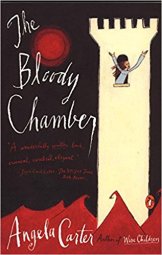
 She adds, “The Magic Toyshop and The Bloody Chamber, by Angela Carter, have made me aware of my sexuality in a much more complicated way, while Muriel Spark’s The Driver’s Seat has opened my eyes to my own lack of sentimentality, just as Affinity, by Sarah Waters, has made me aware of how deeply my empathy runs. Angela Carter’s emphasis on sexuality as mundane, profane
 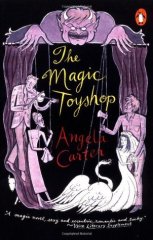 and transcendent has definitely influenced my storytelling. Muriel Spark’s work has given me permission to be unflinching and unapologetic with my characters, and Sarah Waters has taught me to pay attention to physical and emotional details, which are often more telling than paragraphs of exposition.”
 England). She underlines, “My acting training (as well as the critical training I received during my MA) directly influences my writing in many subtle ways: particularly in how I approach characters and the circumstances that inform the narrative arc. I think of writing in terms of lenses and angles—sex is, very often the lens, but the angle is determined by influences, from things I’ve done and read.”
 published by Go Deeper Press. Malin also names David Ives’ Venus in Fur, for its ‘cleverly subversive viciousness’ and Prelude to a Kiss, for its ‘use of magical realism to examine a woman’s fear of death’.
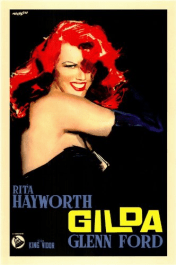 than plot. She names The English Patient, Bram Stoker’s Dracula (directed Francis Ford Coppola) and Gilda (starring Rita Hayworth) as influential films for her writing, as well as Hitchcock’s Rear Window, Shadow of a Doubt and Vertigo. “While they’re all very different, there’s something compelling in their emotional landscape: a tension and melancholic tragedy. That said, one of my favorite movies of all time is Clue; I love the ridiculous humor of it.”



 You can purchase Leslie’s Giving You box set at

 Music is a huge influence in Tabitha’s work. She reveals, “If I want to feel horny, to get in the mood for a big fuck scene, I put on Whole Lotta Love by Led Zepplin. God, that is a sexy song. Honestly, I could go on for hours about music. I go to see bands and concerts a lot and get so fired up. No musical genre is excluded, from country to classical, rap to rock, folk to jazz, dubstep and drum n bass – I love it all.”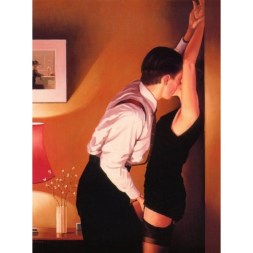
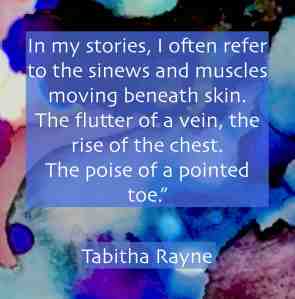 Speaking of her literary influences, Tabitha tells us, “Toni Morrison changed me. She was the first writer, for me, to have sensuality woven throughout every sentence – making it a rich part of her work, rather than a separate thing. In my own writing, I try to keep all things sensual. Not just when I’m writing a sex scene. I like the whole piece to have an air of arousal, of something impending.”
 She has also drawn up plans for a perpetual energy machine using inverted pendulums, and is in the process of designing a hamster wheel: ‘it will be better for their little backs and smoother, for less nocturnal noise annoyance… yes, I have a noisy hamster’.
 Find a full list of Tabitha’s books






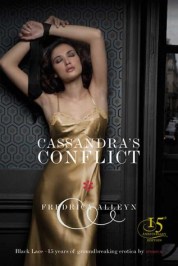 Kay recalls Cassandra’s Conflict, by Frederica Allen, as her introduction to the world of BDSM/S&M literature. She remembers, “It made me realise that you could read about pushing sexual boundaries, taking pleasure from reading, without entering that world yourself.” It was another decade before she put pen to paper, but Kay believes this book had greater influence than she initially realised.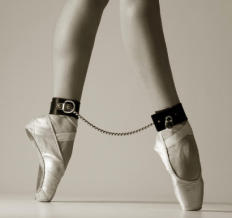
 Of her most recent work of erotica, Wednesday on Thursday, Kay says, “I’m fascinated by words. Their origins, the way we use them and the power they have. What could happen, I wondered, if someone became obsessed with how individuals react to certain words when used in certain situations? Certain erotic situations…”


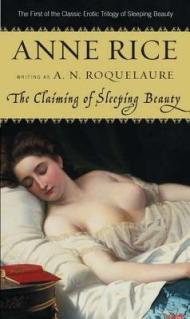 Much later, LN read Roquelaure’s Sleeping Beauty trilogy, then Réage’s Story of O, Antoniou’s Marketplace series and Weatherfield’s Carrie novels. LN explains, “Although the styles (and intentions) of these four women authors differ radically, they each have a definite sense of erotic cruelty—consensual, yes, but often ‘consensual non-consent’. It’s about how the characters deal with the system they’ve agreed to enter. There is love, or something like it, in these books, but desire, and the drive to keep going, to keep pushing oneself, is the bigger theme.”
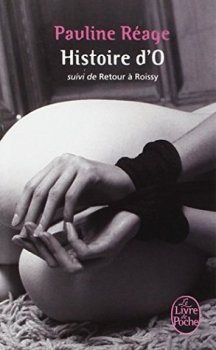 porn’),” says LN, “They’re full of wealthy people, and take place in worldwide organizations that trade and train voluntary sex slaves, or variants thereof: Roquelaure’s world is a conquering castle; Réage’s a more local wealthy club. We follow entry into a whole new world, not just a new relationship.”
 “A woman is seen busily cleaning her sleek Modernist house, in preparation for a dinner party,” LN explains. “The guests all show up, two couples, and I remember thinking it was a little odd that she was the fifth wheel in this; she had no partner. They all look around, so impressed with her house and the food, but, being an air freshener commercial, they start to sniff the air, and we see the dog on the sofa and the fish frying, and then they all look at her, very disapprovingly. She sort of hangs her head in shame. And every time I saw it I felt this wonderful little tension, because it was obvious, to me at least, that she was going to have to be punished…by the guests!”

 immerse the reader. “So much erotica seems to lacks detail until the sex scenes,” LN regrets, ‘As if they’re taking place on an empty stage with no setting.”
 Read my review of LN Bey’s Blue

 Janine also names Angela Carter’s Bloody Chamber as an influence on her own short stories, for style and erotic/fairytale subject matter.
 as have Sondheim’s lyrics, which move and inspire her, being ‘clever and emotionally complex’. She enjoys musicals at the tragic end of the spectrum: Cabaret and Jesus Christ Superstar, and Sondheim’s Into the Woods.
 When Milja Petak released the fallen angel Azazel from five thousand years of imprisonment, she did it out of love and pity. She found herself in a passionate sexual relationship beyond her imagining and control – the beloved plaything of a dark and furious demon who takes what he wants, when he wants, and submits to no restraint. But what she hasn’t bargained on is being drawn into his plan to free all his incarcerated brothers and wage a war against the Powers of Heaven.
 imprison Azazel for all eternity.
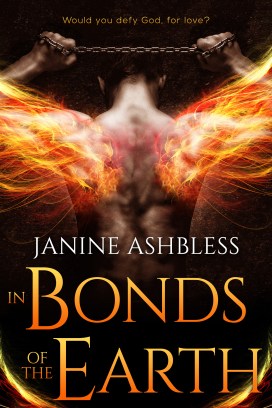 You may like to visit Janine’s




 Struggling writer, Kelly Blake has a secret life as a sex tutor. Celebrated sculptor and recluse, Alexander ‘Lex’ Valentine, can’t stand to be touched. When he seeks out Kelly’s advice incognito, the results are too hot to handle. When Kelly terminates their sessions due to what she considers to be her unprofessional behavior, Lex takes a huge risk, revealing his identity to her at a gala exhibition, his first ever public appearance. When Kelly helps the severely haphephobic Lex escape the grope of reporters and paparazzi, rumors fly that the two are engaged, rumors encouraged by well-meaning friends and colleagues. The press feeding frenzy forces Kelly into hiding at Lex’s mansion where he convinces her to be his private tutor just until the press loses interest, and she can go back home. They discover quickly that touch is not essential for sizzling, pulse-pounding intimacy. But intimacy must survive secrets uncovered, as their sessions become more and more personal.
 touching. From well-detailed interactions to the steamy interludes, this is a story that is blazing hot.” 5 out of 5,
 About the author

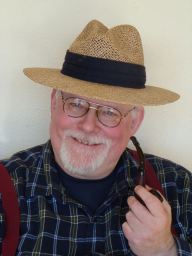 and is currently at work on a novel The Seven Seductions. His work explores the thoughts, feelings and emotions that accompany the erotic experience.
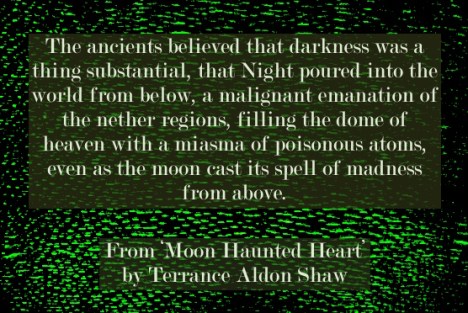

 human condition through the lens of the erotic. See my review
  Another of his short story collections is

 Krissy explains that her love of literature began when her grandmother would pay her 20c for reading and reviewing books. She adds, “I moved on from stories about mice to Moomintroll, and by the time I hit Ray Bradbury I no longer needed the money. The books themselves became the reward. I started to write because books like R is for Rocket and S is for Space by Bradbury left so much space for me as a reader that I needed to add to the dialogue.”
 It comes as no surprise that art has inspired Krissy’s work. Her family are visual artists and, as well as designing the sets for a couple of theatre shows in her youth, she enjoyed her own art exhibition. Her Triptych comprises three conjoined novellas, each named after, and referencing, well-known paintings: The Dream of the Fisherman’s Wife, by Katsushika Hokusai; Susanna and the Elders, by Artemesia Gentileshi, and Romulus and Remus, by Peter Paul Rubens. Krissy stresses, “I can’t seem to write anything without the inspiration of the visual arts.” An Uncertain Grace is inspired by a photo created by Sebastio Salgado, which holds a central position in her narrative.
 best and worst selves, our innermost selves—and who we might become.
 Emmanuelle de Maupassant