
Constraint is Siri Ousdahl’s debut in the genre of erotic fiction, although she has written prominently under an alternate author name for many years. She holds several prestigious writing awards and has worked extensively in publishing.
Within this, my critique of Siri Ousdahl’s novel, she joins me to discuss transgressive themes and the contradictions within our psyche.
Constraint pulls no punches. There is no sweetening of the pill. It is a tale of kidnapping,  rape, violence and humiliation.
Our natural response is outrage. How dare one human being treat another this way? The early phases of the story are written clearly with the intention to arouse this reaction from us.
We are told that Alex is a sadist and has always been so, musing, from the youngest age, on ropes, chains and controlled violence. As an adult, he rises to the challenge of exercising precise control. ‘He wants to work out how much he can darken her flesh without breaking her skin.’
It is from this position that Siri Ousdahl unravels her story: winding back and forth, through past and present, and presenting us, readers, ready to judge and condemn, with knots we must unpick.
What should be simple is not, because we are human, and to be human is to be a creature of paradox.
Siri, while no writer can ‘control’ the reactions they inspire in readers, your story clearly aims to manipulate strong emotional responses, shaping them in various ways as the tale progresses. In this way, where do you hope to lead your reader?
This is my first formal erotic writing. In my other world as a writer I’m committed to psychological realism, and my ambition is to elicit a complicated, conflicted reaction from my readers. Very little is unequivocally one thing or another, red or blue or green; everything is tints, shades, and blends. If our understanding of ourselves is at all realistic, it is full of unresolvable contradictions. I wanted to write a sex novel that reflected that.
When I decided to write a noncon BDSM novel, I was my primary reader, so the person I was challenging was myself. I wanted to write a book that was as morally problematic as Lolita and as sexy as The Story of O. I wanted to see whether I could balance unsentimental realism with the poetry of eroticism, telling a story that, ideally, would both repel and attract. I wanted to see how long I could stay on the tightrope without falling off.
 Our psyche comprises contradictory elements. Linnea, we are told, is ‘an alloy’, stronger than the metals from which she is made. A powerful metaphor in the story is given through Linnea’s sculptures, which comprise contrasting, yet harmonising materials: hickory and chestnut or oak and walnut. They symbolize Linnea’s inner being. ‘There are three tiny knots… clustered like moles on a woman’s shoulder.’ This metaphor continues. ‘The twisting shapes hint at lovers entangled ankle to throat’, bound by fine steel wire, brass straps, clear glass bands, rough rope knotted. Linnea’s art is a visual representation of what she desires for herself: bondage and forced compliance. We are told that ‘wood fucks wood’ and that the scent is ‘musky, human’.
Later, we read that Alex and Linnea’s bodies are a ‘sculpture’, representing ‘blood and hunger’.
Siri, you use Linnea’s art to reveal her state of mind (both during her captivity and beforehand). Can you tell us more about your research into the art world and how you’ve used art to bring layers of meaning to the story?
As a child, I didn’t study art (though I drew a lot), but I was raised in a family that valued art, much of it carved wood and stone sculpture. I’m sure my mother would not be thrilled to know how often I touched the art, running my hands along the shapes, marvelling at the three-dimensionality of it, its gravity.
I knew Linnea was a sculptor almost before I knew anything else about her. She was strong-muscled and ‘saw’ with her hands. Her art needed to be nonverbal, because I’m entirely verbal. Her sculptures were very clear in my head from the start, and I wish I had some of them!
Her photorealistic paintings were a surprise to me, but as I spent time in her head, trapped in the  enclosure, I knew she would become obsessive about the walls: that she would make art from this constraint, as well.
I did a lot of research into the women of the abstract expressionist movement, and I developed immense respect for them. A woman artist of the first half of the twentieth century – in any movement – was in a horrible situation: her work ignored or treated with contempt, expected to model for and/or have sex with the men who defined whether she would ever be taken seriously.
As we enter deeper into Constraint, we’re given insight into the mind of kidnapper Alex, and the subject of his fixation, Linnea. Neither are as they seem and, as the story unfolds, the paradoxes within their natures are made more explicit.
A central theme of the story is our inward battle: our desire for self-determination and our wish to surrender some part of ourselves, to forfeit control, to allow another human ‘under our skin’, even (or sometimes, especially) where we know that surrender has the power to harm us. Most love stories explore, to some extent, this contradictory push and pull. In Constraint, there is an overt ‘battle’ between Linnea and Alex.
We’re told that the attraction for Alex is the paradox of the situation: that he enjoys Linnea’s compulsion to fight him, while witnessing her simultaneous arousal, seemingly against her wishes. He enjoys the ‘battle’ yet also wishes ‘for her to want him as much as he wants her’. We witness Alex’s violence towards Linnea, yet also his tenderness. ‘She has rolled close to him in her sleep, with her hands tucked close to his ribs and her face pressed against his shoulder… He…turns his face into her sleep knotted hair and breathes and breathes and breathes.’
We also see Alex’s compulsion to lose himself to a place of otherness, of transcendence. ‘He snaps the switch lightly against his forearm. It’s barely a touch, and the bright sting is no more challenging than walking out into icy-cold air or biting into raw ginger, but a faint white stripe flares and flushes red, a color shift as sudden as an octopus shifting camouflage. He observes this  with interest. He is dropping into the strange, abstract space where she stops being entirely real to him, where he stops being real to himself: the no-place that is all places, and their bodies become geometries and his body and brain divide themselves into pieces simultaneously dissociative and entirely, pulsingly, engaged.’
While whipping Linnea, Alex ‘…does not think as he builds rhythms, patterns… He switches to using both floggers, infinite eights overlapping. And faster, until he is breathless, fighting a strange wild laugh that is rooted not in his mind but his body’s work… Linnea is barely present in his mind; she is also the entire focus of all his attention.’
Meanwhile, we learn that, as a child, Linnea played games of self-torture for pleasure. ‘In her teens she started to make sense of it all. She read Réage, Millet, Nin, Roquelaure, McNeill; eventually (with a horrified blend of alienation and recognition) de Sade.’ Linnea ‘knew she longed for bondage and all the sorts of torment ingenious men and women had developed. She was hungry for the whip, the collar, marks.’ She ‘knows that her body will respond in complicated ways—as it always has been complex, pain and pleasure tangled like necklaces tossed onto a bed…’
In this way, they are sexually well matched. We are told that their ‘games and rituals’ are such as ‘their natures decree’. Linnea watches coyotes outside, dancing, playing, fighting, then mating: another metaphor for her relationship with Alex.
Siri, can you tell us more about the psychology of the dynamic between your  protagonists?
I was a lot like Linnea as a girl, with a high tolerance for pain and a craving for adventure that was not satisfied by my quiet upbringing. I did many dangerous and stupid things, all of them exhilarating. I was also a pain in the neck, for reasons I did not then understand: My mother says that I would ‘cruise for a spanking’, restless and clearly pushing rule after rule until I eventually did get spanked – ‘and then you would calm right down, happy and settled’ – which is how I remember it, as well.
My nature decreed what I wanted, even as a child. As I became sexual in my late teens, I found I moved effortlessly into BDSM, though I didn’t always understand how to get what I needed until I was in my 30s. As an adult, I have both topped and subbed for floggings, whippings, bondage, D/s, and many other things. When I write, I write from experience.
Despite this, I think I understand Alex better than I understand Linnea. Writing is basically a top’s game: I write something to elicit a response. I design a scene and then execute it and if I do it right, the reader feels things they didn’t expect. I am in charge, though the reader can always safeword out, put down the book and walk away.
In exploring the theme of constraint and freedom, we see the metaphor of inside and  outside spaces – looking inward and outward. Linnea struggles against Alex’s constraint of her freedom, but we come to see that her constraint is also internal. ‘She’s a coyote in a leg-hold trap, chewing at her own ankle.’ When she asks what he wants from her, he laughs, evading, ‘because the answer is love and he cannot admit that’. Linnea evades, as well. ‘It is not the house and enclosure that blocks honesty; their constraints travel with them.’
Alex seeks tension. He ‘draws a narrow line around Linnea and longs for the moments she breaks past them… What hawk comes to your hand without training, without bribes and constraints…? How is this different than other, more conventional relationships?’ He muses that even true love is built from ‘unconscious accommodations, invisible chains.’
The non-consensual elements of Constraint are, by nature, disturbing, while yet having power to arouse. It is this very juxtaposition that makes the story compelling, since we are encouraged to examine paradoxes within our own behaviour. You’re exploring where many authors fear to tread. Siri, what inspired you to choose this theme, of our contradictory, paradoxical, self-destructive nature, and of the constraints we carry within us?
A correctly structured BDSM experience (or relationship) has clear rules and expectations, but many ‘traditional’ experiences do not: in most relationships, love and trust change meaning unilaterally, over time, without negotiation. A lot of BDSM fiction is actually terrible BDSM: even if the sex/play itself is safe, sane, and consensual – even if there are contracts – the characters lie, manipulate, gaslight, misdirect, and cheat their way into the relationship.
Alex is, at least, honest about what he wants, to the extent he understands it.
Having delved into Linnea’s romantic past, Alex challenges her lack of intimacy with  anyone. She resists, saying, “No one is anyone’s.” Later, taunted by dominatrix Klee, Linnea asserts, “I am not yours. I am no one’s.” Klee responds, “So sad. We all belong to someone…”
We see Alex’s desire to ‘possess’ Linnea, to make her love him, while this can never be true until she wishes it to be so, until she recognizes an emotional connection to him.
The relationship between Linnea and Alex progresses, through shared intimacies, until she feels that he is ‘seeing her, actual her, instead of whatever he usually sees when he looks at her’. We read that he sees ‘she is her own person’.
By the closing pages, he has accepted that his non-consensual treatment of her has been unacceptable, to the extent that he is willing to suffer any consequences (including imprisonment). He notes that he no longer has ‘certainty that his decisions are the right ones’.
Alex tells Linnea explicitly that he loves her and offers that she may choose what happens next, even if it means her turning him in to the police. He has the power to continue as he did, but recognizes his error in having attempted to force her love.
Meanwhile, Linnea admits to Alex that she believes he knows her as no one else does, and chooses to submit because it is what SHE wishes, not because it is forced upon her. ‘Her skin is her own. She is not afraid of him. She never has been; fear was never the thing that kept her here.’
Siri, did you consider other conclusions to Constraint or, for you, was this ending inevitable?
As with The Story of O, several endings are possible. This is the HEA ending, or as close as a story like this could honestly have – and it is dependent on where I typed ‘The End’. I can’t believe they  will stay together as things are, but there’s a sequel I have thought about that starts six months from now, when Linnea has left Alex and ends up in Switzerland, using Klee, Berndt, Vadim (and others) to make sense of her experience. Can they return to one another after that? Depends on the next book.
There’s also a less romantic ending where she escapes or he lets her go and she returns to her life (or a life) without talking about this to the police – which is how women often address rape. And an ending where she does turn him in, and has to then deal with the fact that she will never be as satisfied sexually, as seen by her partner, as she was with him.
Fiction, within the safety of its pages, invites us to explore what disturbs us, to process what is written and to respond. It asks us to reflect upon our own behaviour, our motivations and compulsions. The non-consensual theme of Constraint is liable to inspire controversy, reaching as it does into realms of discomfort for many readers. To anyone who would criticize the story as eroticism of rape, how would you respond?
It’s fiction. In what way is this different than reading book after book about a murderer? If someone is fucked up enough to think that an erotic novel gives them permission to rape someone, the problem is the rapist’s. That said, we do live in a culture permeated with sexual violence against women; the (substantial) percentage of women who like to read or watch noncon and dubcon erotica are as conditioned to this as the men who think it’s okay to rape. A hundred years from now, if we sort out rape culture, will books like this still be being written? I don’t know, though I have theories.
I am an intelligent, philosophically inclined woman who values honesty in interpersonal dealings. I am writing this book as a direct response to the artificiality of most noncon and dubcon fiction. Is it eroticizing rape? It is also engaging directly what what’s wrong with eroticizing rape. It’s a complicated stance.
Siri, your language is both precise and lyrical. Which authors have inspired you in creating your distinctive voice?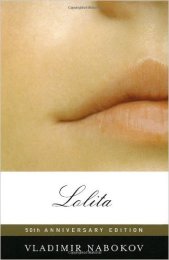
I was thinking a lot of Lolita while I was working on this. Nabokov never sets a foot wrong: every word is exactly calibrated. I was also thinking a lot about the French writer Alain Robbe-Grillet’s strangely opaque voice.
I’ve no doubt that readers will anticipate further works from you. Can you share what’s in store?
I do write fiction under another name, and some of Siri’s readers may recognize her voice elsewhere. I have thought about writing about Klee as a young woman in 1970s France: how did she become the woman she is? I was partway through the book when I read a recent Vanity Fair article about erotic novelist/octogenarian dominatrix Catherine Robbe-Grillet, wife of writer Alain (and what a strange coincidence that was). Robbe-Grillet has a lot in common with Klee, I realized.
 I’m also researching an erotic fantasy novel! Yes, research: I can’t bring myself to write anything without lots and lots of reading ahead of time.
Thank you once again to Siri for taking time to discuss her intent in writing and the complex psychologies of her work.
If you’d like to read Constraint, you’ll find it for sale, here.
You can also find Siri at Visconti Press
Read more from Siri on motivations in writing erotic fiction here, as part of the 130 Authors series.
You may also like to read critique of Constraint written by Remittance Girl, here, and by Terrance Aldon Shaw, of Big Brain Erotica, here.

 I
I Always this dance, and writing has helped me embrace the totality in the supposed contradictions.’ – read more
  Others discovered the liberation of writing much later.


 Christina Mandara voices the opinion that women’s reading material is being dictated to them: a view shared by Sorcha Black, who believes, “The policing of women’s sexuality includes censoring what we read.”
 Remittance Girl, in her article,
 However, the majority of writers with the 130 authors survey assert a desire to write recognizable, diverse characters, and situations, with psychological depth, to better allow readers to empathize, and enter into alternate possibilities.
 (where the plot extends beyond the surprise reveal of them actually being a §transperson). She laments the ‘generic’ in erotic fiction.
 experience is fantastic even though you don’t know his/her name. The female version usually has the gorgeous partner falling in love for the first time in his life after the aforementioned great sex.” Donna asserts, “I’d like to see more celebration of the magic of sex between people who know each other well. I’d like to acknowledge that time and trust are important in creating a situation where great sex can happen. Couples who’ve been together for a long time are not necessarily bored with each other. They can go deeper, they can play, they know each other well enough to trust it will be mutually enjoyable.”
  mistrust, fear and emotional wounding’ — shows characters obliged to ‘reconstruct their identity in the light of what they’ve done’ –more
  “I love exploring the slippery relationship between truth and fiction. The stories I value convey truths that spring from careful thought and deep feeling, truths we often keep secret from others and ourselves. Exploring those truths is what I aim for when I write.”
 She adds that the public versus private face of a person can exist not only in terms of their sexuality (how they express it to the world versus how they are in private) but their art form (dance, painting, sculpture, music, songwriting, writing, and so on).
 Themes: Mortality
 share of authors, and our voices are growing louder.
 There’s still a degree of censorship, and traditional publishers remain somewhat cautious about stepping outside of the box, but, if we keep writing up against the boundaries, inch by inch, they will surely come down.
 It’s true that some elements of the human condition are universal. We all, surely, know what it is to love, to despair, to smile, or to regret. We know the fragility of life and we share wonder in the world we inhabit.
 As Cecilia Tan states, “I was put on Earth to write but it wasn’t until I started writing erotic fiction that I found my voice. I want a world where sexual freedom, not sexual oppression, is the norm, and so I write about sexual pleasure and fulfillment.”
 as well as a creative one’. She explains, “French feminist Helene Cixous phrased it beautifully in an essay called ‘Laugh of the Medusa’ – ‘Write yourself. Your body must be heard.’ I think this applies to all women’s stories, but particularly those around sexuality. The political aspect of it, the desire to confront and subvert, is a strong motivation for me – as strong as the desire to seduce and arouse.”
 that some readers have criticized her writing of female protagonists who lack ‘the same moral compass’ as themselves. She notes, “I call these cardboard cut out heroines. From my personal experience, people make crazy decisions when it comes to love and passion.” She asserts that ‘flawed, impulsive, manipulative heroines’ breathe life into fiction.
 some authors mention a desire to explore the realm of non-consent.
 preoccupy myself with it as I write would be to stymie the story before it’s even formed. While I acknowledge the reality of censorship, I try not to let it, or fear of it, influence my writing. I serve the story. If it trips censors, so be it. I have the luxury of pulling it and sending it elsewhere.“
 However, KD Grace stresses that this generates an attitude of ‘us against the world and circle the wagons’ and ‘a real sense of camaraderie among erotica writers (with little of the petty jealousy I’ve seen among writers in some other genres).’ She feels the erotica writing community as ‘a family’, saying, “That encouragement has meant a lot to me through the years.”
 desire. I think it put light on the seed already in me to find new and evocative ways of writing about feminine desire and describing the desiring female body.”
 thing that truly inspires me to silence the inner critic and just write and enjoy the pleasure of speaking the unspeakable.”
 and our fears. We emerge changed and, as RG tells us, we ‘expose something true’ of ourselves (more
 Having interviewed just over
  was so much poorly written erotica. How hard could it be to climb to the top of that dung heap? However, the more I read, the more I discovered truly talented writers, and became determined to write quality stories myself.”
 drawing of two pricks. The editor of the volume asked me to remove the phrase.” He felt obliged to concede, being a young academic and this being his first publication. He asserts that he would not do so today.
 only benefit of a publisher is the promise of reviews, which many small presses don’t bother to solicit.”
  horror novel through a small press. It was a disaster. There was so little editorial work done that it went on sale within a week of me submitting it. I should have smelled a rat. They did no promo and the company quickly went bust.”
  with ‘publishing’ in that sentence.”
 books visible’. She asserts, “My advice to new authors would be to ensure you have built a brand before you set out. Know the image you’d like to portray to your followers and work hard to build on what you’ve achieved.” She also warns against expecting ‘instant success’.
 where ideas may be further debated, and professional expertise shared, you may like to visit the
  unsurprisingly, apt to denigrate erotic fiction as no more than ‘poorly written filth’.
 in their craft, including through editing “I‘d like to see better editing, with consumer dollars following the well-groomed and thoughtful written word.”
 disappointed on coming across a book labelled as ‘erotica’, which does not meet their expectations for romantic elements. Meanwhile, erotic fiction authors may be ‘judged’ (and reviewed critically) against criteria they have never attempted to meet.
 men’s writing on the topics of relationships and sex is more often respected, being lauded for insight into human nature and named as literary fiction, while women’s work on the same topics is more generally dismissed. She states, “Romance has a bad reputation as being sub-par… as if what women choose to read isn’t as respectable or reputable as what men choose. The aggravating thing is that when women write about relationships and sex (romance novels), their books are viewed by some with disdain or disinterest. But when a man writes about the same topics, his books are viewed with great respect. He’s said to have great insight into human nature. His books are often lifted out of the romance genre and placed in literary fiction, which some view as having more clout. Women’s voices and insights matter.”
 are commercially risk-averse, serving up what they believe audiences wish to consume. The situation has become, largely, a self-perpetuating loop, of authors creating works within a ‘safe’ and market-proven zone.
 it shapes our thoughts’. Siri Ousdahl states, “I’d like there to be a larger place for high-quality, graphic sex writing: fiction that is not coy, does not romanticize or trivialize, and is psychologically realistic.”
 of hiding and downplaying erotica’. As Elizabeth Safleur puts it, “It’d be nice if Amazon didn’t bury our titles.”
 starting point for discussion rather than offering any definitive answers.
 ‘becomes disrupted’, through ‘extreme pleasure, pain or mental anguish’. (more
  into a realistic vein, much of what people actually want is that which they can’t (or don’t feel they can) have in real life. This is why rape fantasies, incest and other transgressive sexual acts continue to sell erotica and generate clicks. The appeal of the forbidden is as old as the Bible, when Eve and the apple laid the foundation for centuries of sexual taboo. The fact is that we get pleasure from doing that which we’re not ‘supposed’ to do… While some taboos have been neutralized by an expanded notion of sex positivity (for the most part, gay couplings, anal and oral sex and extramarital situations don’t pack the transgressive punch they historically have), the amount of incest porn, tentacle porn, bestiality, non-con and various forms of edge play being consumed has risen…” Malin notes that, as such acts are ‘still taboo’, they ‘retain the power to arouse in ways that non-transgressive acts don’t tend to’.
  themes. Not only am I turned on by this objectionable thing – I want to think about why I am.”
 inspiring deeper levels of reflection). This may be why historical erotic fiction is so popular, since the setting more immediately confers a transgressive stance: a feeling of ‘taboo’.
 that has triggered deep and serious introspection on many topics. These are the books that will stay with me for life.”
  able within the limits set by major retailers (we cannot escape the fact that publishers are in business to make money).
 despite the majority of countries worldwide (and the majority of American states) setting the age of consent below 18 years.
 despise. They all answer one question, without hesitation… what if?”
 books don’t fit my personal beliefs, my business model, or my audience, so I’m not going to publish them’ and that has to be okay.”
 with friends and family and how far we keep separate our ‘writing identity’, to avoid social stigmatization.
 avoid ‘judgement’, not just from co-workers or neighbours, but from family and friends, or to avoid negative consequences for those they love.
 Although the journey continues, we’ve come a long way in embracing equality of rights across sexual orientation, race and gender. And yet, whatever their ‘secret’ reading habits, some members of the public draw the line at rubbing shoulders with writers of what many term ‘filth’.
 As Spencer Dryden notes: “If my friends, family and associates learned of my interest in erotica, they would drop dead in horror, so I use a pen name.
 agent who essentially said, ‘Yuck, don’t contact me again’.”
  of my family, but this has been exacerbated by my choice to write erotica. Indeed, I was told I should concentrate my energies ‘on something much better’ after I published my last book. The person involved hadn’t even read the book, and had no idea that, aside from the power play through the sex, it broached some serious subjects that have been prevalent in my family for decades, and that there was more to consider than which pages to bookmark and show their friends in secret! My children never cease to amaze me, though: they have just accepted what I write and are interested in me as a writer, regardless of genre. In fact, my daughter seems to find it pretty cool that I write erotica.”
 particularly through dreams.” Jay Willowbay adds his belief that ‘any erotic author that doesn’t mine their own fantasies is ignoring their most bountiful source of vivid and exciting material, and letting it go to waste’. Cari Silverwood continues this train of thought, saying that, if we neglect to use our fantasies we’re unlikely to write scenes which ‘resonate’. Tamsin Flowers comments that fantasies feed into her work ‘either explicitly or less directly, lending shade and nuance’.
 Tabitha Rayne also asserts that personal fantasies are the engine behind her writing, saying, “No matter what I write, in that moment, it is my desire. It is absolutely my fantasy.” She notes that what stirs her one day can be very different the next.
 The key word here is ‘fantasy’. The very act of fantasizing allows us to control the details; we are pulling all the strings. Those fantasies are of our choosing, and we inwardly narrate them just the way we decide upon. This is not to say that writers, or readers, who enjoy the fantasy of ‘forced seduction’ are complacent regarding the brutal crime of rape. The fictional-fantasy world of ravishment is a different beast to real-life sexual assault.
 must have consensual, hearts and flowers stories. I can’t understand why eBook stores are being so censorious in the erotica genre, but not horror.”
 writing but I also want fiction to be an uninhibited, imaginative space where we can follow characters who are dangerous, or who are in jeopardy, or suffering, or who have unsanctioned desires. These wishes often pull in contrary directions. In erotica, non-con acts are often set within a framework of consent (as in BDSM practice or fantasy role-play) to indicate that the scenario is not real. However, this usually reduces the blood-pumping thrill for me as a reader.”
  We can safely assume that those featuring aliens, dinosaurs, yetis, vampires, werewolves and other monstrous and supernatural beasts are likely to spring from the imagination rather than from real life encounters, with the same logic applied to stories of pirates and Vikings and all manner of historical or ‘fantasy’ settings.
 encourage people to examine their assumptions about sexuality and live closer to the edge.”
 ‘what would otherwise bring only repression and shame’.
 they’re struggling or uncertain or scared. One that says, ‘Look, everyone’s been there. Everyone’s failed.’”
 gloriously, or succeeded but had to make sacrifices. These are elements I enjoy exploring in my erotica.”
 calls them: to the small lies we tell ourselves, to our unspoken motivations, to the ways in which we manipulate or make use of others.
 Madeline Moore echoes this, saying, “Many of my ideas could be erotica or horror, depending on the way I twist the tale. I find it interesting that it’s so easy to see a concept going in either direction. I wonder if there’s always a horrifying aspect to sex; or a sexual aspect to horror. Adrenalin is adrenalin, after all; same physical experience interpreted in different ways. It’s all in the mind.”
 our compulsions, the dichotomy of pain versus pleasure, and the enigma of sexual connection as the route to ‘loss of self’.
 about my own sexuality and desire. Writing has given me an understanding; it has allowed me to own a sexuality I’d been conflicted about and confused by when I was younger.”
  into worlds that are foreign and slightly magical or dangerous, or squalid… I don’t look for identification in the fiction I read, I look for difference…”
 On inviting authors to share their thoughts regarding writing ‘the erotic’, I couldn’t have imagined that so many would respond, nor that they would answer with such honestly. To find out more about them, click
  Sometimes, the revelatory urge to write in this way can come as a huge surprise to the author, as if characters have turned wayward, leading us down a path hitherto hidden.
 she later recognized as being ‘paranormal erotica’. She notes, “It just needed me to discover the genre and realize there was an outlet!”
 Adrea tells us, “What I most felt drawn to reading was the feminine experience of the world, and stories of growth, transformation or dislocation, felt through and mediated by the body. These were the things that I began to write about: Love and longing. Loss. Translating the physical arts I most loved into words: my experiences of dancing and life-modelling. Then, more arduously, carving out narratives of sexual trauma. Death. Then, the sensual pleasures. Sex. Light, dark, light, dark. Always this dance, and writing has helped me embrace the totality in the supposed contradictions.”
 Similarly, Devi Ansevi recalls wanting to portray an authentic woman’s perspective. She underlines,“Most of the stuff I found when I first started writing fell into two extremes: written from the male perspective – too short, too mechanical, too much like Playboy porn, too unlike how I experienced pleasure; or written from the female perspective – hyper-romantic metaphorical descriptions of making tender love after both parties have declared undying adoration. I wanted hot, detailed, messy sex from a woman’s perspective.”
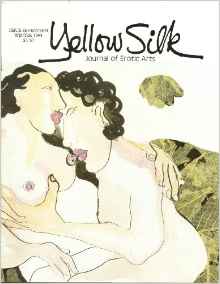 State University in the 1970s, I wrote the usual stories about sex and human relationships, which begin with a couple meeting, going to the apartment of one or the other, going to bed . . . and then the next morning. One day I saw an ad asking for erotic stories for a journal called ‘Yellow Silk’. I had one of those flashes of inspiration, a realization that I’d been writing erotic stories all along, and all I needed to do was fill in what happened during those three dots . . . In 1984, my first erotic story was published in ‘Yellow Silk’; it won first prize, worth $25, which was more money than I’d ever made from writing.”
 into exploring more deeply, probing into how people tackle their monsters.

 Importantly, the vast majority of writers agree that they pen their words with the intention of reaching out to an audience. As Cari Silverwood notes, “As a writer, I’m not an island. I need my readers. Would I write if I had no readers? No. No. No.” Erotic fiction invites intimacy on a level unseen across other genres, emotionally and physically. There is an electrifying thrill in the knowledge of touching readers, moving them at the most profound level.
 Emmanuelle de Maupassant