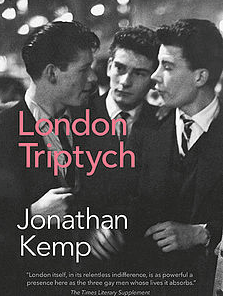
 Jonathan Kemp explores hungers we cannot explain and paints images not only intensely erotic, but tender. Here, in London Triptych, he shows us the unfolding of three men’s lives, each an unravelling ribbon, fluid, twisting, looking back upon itself. Their stories are confessionals, inviting us to enter the nocturnal, hidden recesses of the psyche. Meanwhile, London’s shadows and secrets echo those within our protagonists, and remind us that we readers, too, have our untold stories.
Each of the tales within the ‘triptych’ takes place, primarily, in London, though separated by five decades. We see the details of the setting change, while the themes remain eternal: our desire for what we cannot articulate; our struggle to express ourselves freely; our eagerness to navigate the ‘geography of possibilities’; our delight in love, glorious, overwhelming and unexpected; and the vulnerability of that state.
1890s rent boy Jack Rose falls into an almost unwilling passion for Oscar Wilde, leading towards a path of disappointment and betrayal. 1950s artist Colin tentatively explores his sexuality, against a backdrop of prudery and prejudice. In the 1990s, David awaits release from prison, telling of the lover who deceived him.

With each interchanging narrative, we learn more of each protagonist’s history and motivations, and we see the ways in which their stories resemble one other. They do not go in search of love. Rather, it surprises them, catching them off guard. They experience transcendence and then misery: a change in their worldview.
Sex is central to the story, an enduring, irresistible force, with or without love. It is the engine driving each of our narrators to discover a version of the ‘self’ yet out of reach.
Jack Rose tells us: ‘I became a whore in order, not to find myself, but to lose myself in the dense forest of that name.’
However, love is the transformative emotion. Love enervates and destroys, bringing ultimate joy and torture. We are shown its ability to shed light on our restricted, repetitive paths.
Kemp explores what it has meant to be homosexual in a world which views those desires as dangerously inverted, and shows us the tension between pleasure and danger, when there are ‘no laws but those of the body’:
‘When you can be free, free to pursue any desire, acquire any knowledge… it’s the most terrifying place to live. It’s dangerously beautiful…’
 As ever, Kemp’s storytelling goes beyond action and consequence, or the clever use of dialogue to reveal character, or the exploration of eternal themes. His talent lies in his use of language, probing words for their secrets, for their ‘blood-beat’, for their ability to reveal ‘meaning held within the contours of the skin’. He returns, again and again, to the inadequacy of language to express the erotic truths of the body, the ‘cannibal, animal hunger’ of desire.
And yet, he, as few authors can, animates the ‘universal language of lust written on the body and spoken by the eyes and fingers’.
He shows us that sex can take us to other destinations within the ‘self’, as if ‘opening doors that lead to other corridors, and other doors’: ‘I am here without knowing how. Suddenly, terrifyingly present. Here, now, lost and hot…’
Meanwhile, London itself embodies the elusive, enchanting paradox of existence. It is a place of anonymity, and simultaneous intimacy; London is the unseen, legion-faced (and thus faceless) listener, inviting the narrators to share their secrets. It is a place of judgment (all three stories bring to bear the presence of the law and prospective punishment for homosexual transgression) and of liberation. It is a place of contradictions, just as we are contradictory.
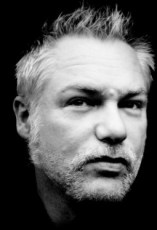 Jonathan Kemp teaches creative writing and comparative literature at Birkbeck College, London.
London Triptych, his first novel, won the Authors’ Club Best First Novel Award in 2011 and was shortlisted for the Polari Prize and the Green Carnation Prize.
He is also the author of Ghosting (my review here) and 26, my review here.
Hear directly from Jonathan Kemp, on how the novel came to be, here, in an interview with Polari Magazine.

Also, you may like to visit this article, featuring Jonathan Kemp: Men Writing Erotic Fiction
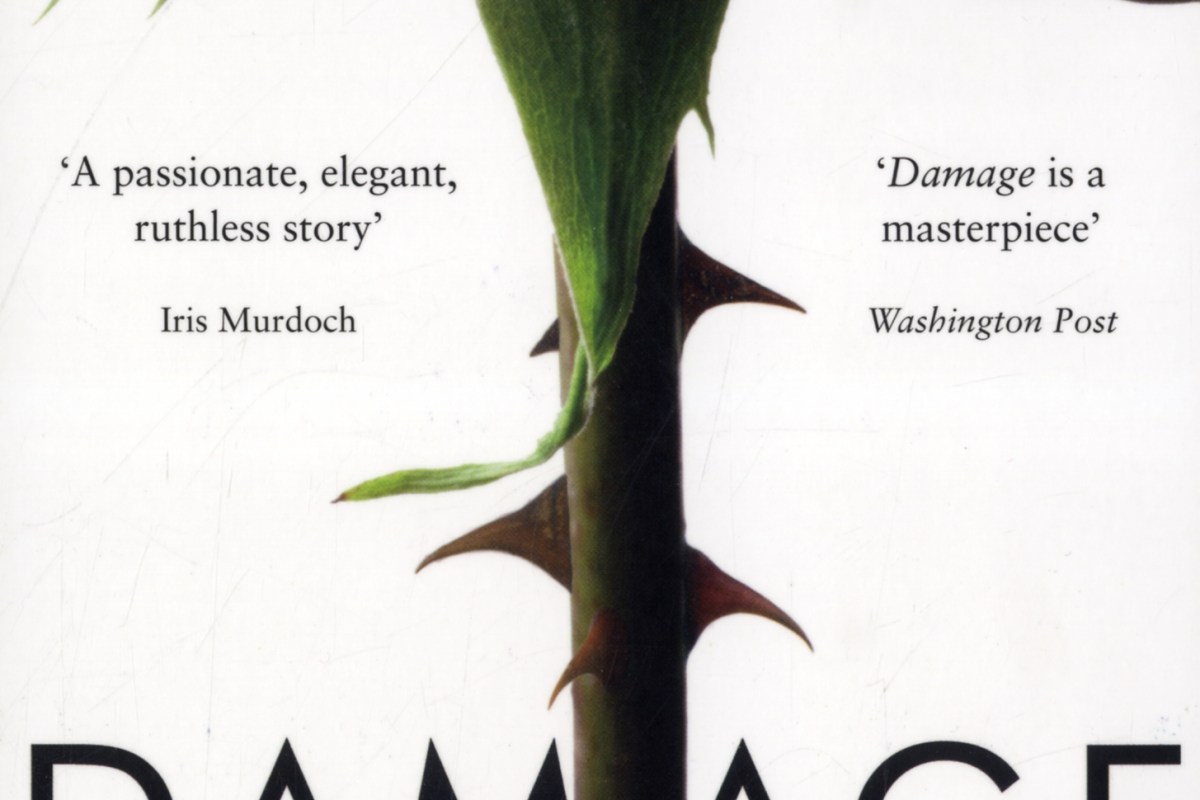
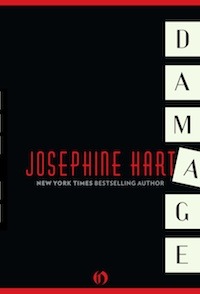 minister Fleming, is clinical in its formality, in keeping with his social position. His life revolves around public service, and the care of his family and, at the heart of this seeming ‘order’ he is deeply unhappy.
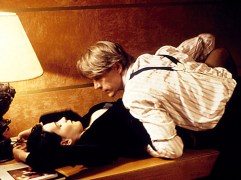 ‘… my life would have been lost in contemplation of the emerging skeleton beneath my skin. It was as though a man’s bones broke through the face of the werewolf. Shining with humanity he stalked through his midnight life towards the first day.’
 Juliette Binoche, directed by Louis Malle, in which we witness more of the sexual nature of the affair. In her book, Hart does not describe sex at length, and yet we are left in no doubt that the acts are intense.
 angles that provoke the astounded primitive to leap delighted from the civilised skin…There would be time for words obscene and dangerous. There would be time for flowers to put out the eyes and for silken softness to close the ears.’
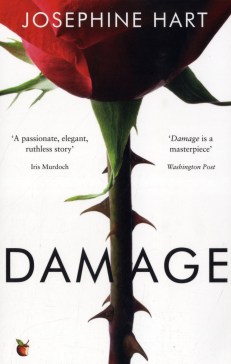 attempting to apologize or make excuses. He is in the grip of what he knows will destroy him, and we abhor him for it. And yet, we see that he is powerless, just as Anna is powerless.
 Josephine Hart achieves something rare in this novella: a helplessness that speaks deeply to the reader, a knowledge that, however sane and ordered our life, we carry our own destructive flame, the potential for our own acts of ‘damage’.
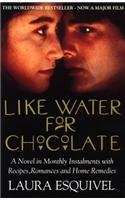
 Exploring the burning pleasure and pain of physical desire is Laura Esquivel’s ‘Like Water for Chocolate’. It is an erotic tale in the purest sense, delving the agony of repressed love, and the intense delight and suffering of which we are capable. It evokes the smells and tastes of the body, as well as those of the kitchen, showing the power of the senses to overwhelm us.
 touching. She is ‘like water for hot chocolate’ because she is ‘on the verge of boiling over‘ with desire.
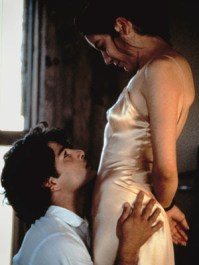 Passion is contained and beaten into submission as surely as Tita herself whips eggs into meringue. Each dish provides a metaphor for Tita’s love life and cooking remains her only way of expressing her emotions, with magical results. Weeping as she beats the wedding cake for Pedro and Rosaura, her tears enter the mixture. As each guest takes a bite, they are overcome by an intense longing for their lost loves, by sadness at opportunities missed and sacrifices made. Their despair is such that they end by vomiting it from their bodies, like poison.
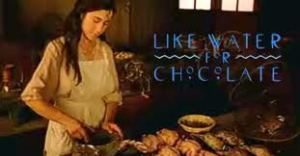 powerfully charged that the wooden boards catch fire.
 and rising to the position of general. There, she meets Juan once more, and they become married, fulfilling the destiny denied Tita and Pedro. In many ways, Gertrudis’ path throws that of Tita into sharp relief, she being confined to the kitchen and to watching over other family members, while Gertrudis, literally helps lead a revolution. She so firmly throws off all conventions, fully embracing her sexual nature, that we might argue that she, rather than Tita, would have made a more fascinating heroine.
 tunnel appears… and calls us to recover our lost divine origin.’


 To hear the full (6 minute) audio recording of this velvet fantasy, inspired by Film Noire, and to learn more about intent in erotic fiction, visit Adrea’s



 Emmanuelle de Maupassant