A Review of Licked : Tales of Salt-Sweet Delight

Licked : seven tales of oral pleasure : a review

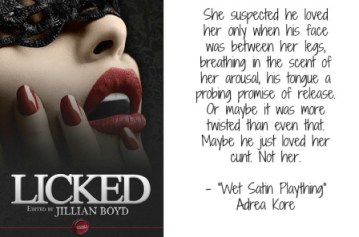
1fd25a7c1fb4e91da3a2e82318309941As Adrea Kore explains, in her interview with editor Jillian Boyd: ‘Going down’ connotes the Underworld: descending beneath. Basements, underwater caves, places of darkness and mystery… Venturing into the unknown, we yearn for a little danger, a little adventure, but sometimes also treasure, and discovery.

This anthology is devoted to the delights of sexual scent and juices slick, to our impulse to Adrea Kore Lickedlose ourselves in another, to the luscious lapping of a lover’s cream.

Kinky

Rob Rosen rises to the challenge of defining kink, in ‘Sanitised For Your Pleasure’. His futuristic, dystopian setting lends itself well to contemplation of how sexual ‘norms’ are shaped by cultural trends. In his world, pills are popped to eliminate anything deemed unsavoury, from body odour and body hair, to bad breath and dandruff. Eventually, babies are born without these ‘offensive’ extras. He imagines a society in which the human organism has no scent of its own, and no flavour. 4902cbfe47e4963927a76b1d543de84aIn such a setting, to seek out sex with smell and taste becomes a fetish in itself. Finding an arse crack tickled by hair takes the protagonist to heady heights of arousal. This is a clever celebration of the human body, in its all sweaty, hairy glory.

Intense

One of my favourite writers of erotic fiction, Adrea Kore, explores the torture of desire, of compulsion and addiction, in ‘Wet Satin Plaything’. She writes not only to arouse but to challenge us intellectually and emotionally. Her cleverly embroidered story of revenge is haunting, its prose woven with poetic refrain. Each sentence is a perfect melody in itself. Adrea Kore Licked quoteMeanwhile, her descriptions of oral sex are unsurpassed. I was left dry-mouthed and anticipatory.

Joyous

In ‘Rip’s Reward’, Marie Piper gave me my first ever reading of ‘Western style erotica’ and I found it utterly charming, as well as more than a little arousing. Marie truly had me rooting for her characters’ happiness.

Nineteenth-century_erotic_alphabet_UIntimate

Robin Watergrove’s confiding narrator voice, in ‘Just Thirsty’, bathes us in tender, sensuous prose: We’re unmoored; no voices now, too far off shore to make sense of each other’s words. I rock against her body and she pulses back against mine. Swimming in the smell of her, soaked into the sheets.


e-is-for-cunnilingusWitty

Dale Cameron Lowry’s ‘Sucker for Love’ begins by musing humorously on the attraction of certain flavours of the body, and his early introduction to the notion of oral pleasure: I found out about oral sex for the first time like many children my age did: by listening to BBC World Service over breakfast… it was the year U.S. President Bill Clinton scandalized the American citizenry with his sexual shenanigans. Our protagonist’s mother explains that it’s an acquired taste, like beer: ‘Grown-ups like to taste their lovers.’ she says. His childhood-self scoffs: ‘Beer smelled like wee. Genitals made wee. Never mind what anuses did. I didn’t want any of it near my mouth.’ As the tale unfolds, it is tender and romantic, satisfying and whimsical.

Erotic Soviet, Alphabet 1931, MerkurovWistful

Suanne Schafer, in ‘Feeding Her’ gives us a poignant story of how illness (and mastectomy) can change our self-image and others’ perception of us. Showing a talent for penning ‘believable’ characters, Suanne unfolds a tale with sensitivity and emotional depth.

Mysterious

In ‘Vapour, Venom, Oleander’, Jessica Taylor conjures ancient Greece, as her prophetic Sibyl of Delphi interprets the fumes of the Oracle, advising Romulus on the founding of Rome.

RevelatoryScreen Shot 2016-03-28 at 10.47.29

Let go your inhibitions and inhabit your senses. Embrace these tales of salt-sweet delight and, in so doing, discover oral pleasures anew.

As Adrea Kore invites us: ‘Get Licked. You know you want to…’

Edited by Jill Boyd, the edition is available here.

Nights at the Circus: a review

If ever a story defied categorisation and deconstruction, here it sits!

Luxuriously lyrical and peopled by a huge cast of cacophonous eccentrics, such that the reader cannot begin to keep track of each one, it is as if Angela Carter went to every length to make her tale as chaotic and exceptionally unbelievable as possible. Above all else, it celebrates the ridiculous and the unexplainable, the surreal and the dazzlingly grotesque.

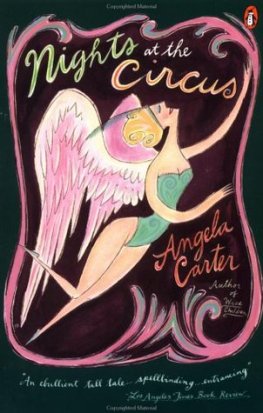
Nights at the Circus review Angela CarterHere is evidence that plot need not follow a clear arc, and that characters need not be realistic, let alone likable. She gives us the vulgar and the ethereal, motives base and sublime. Beribboned in silk and velvets, her dark world of magnificent misfits and baroque tragedy is fascinating, as only the truly bizarre can be. It is an outlandish, irreverent, boisterous romp.

And, at the summit of this shabbily beautiful fable is the most gaudy and bizarre character of them all: the audacious, voracious, foul-mouthed, star-spangled, gloriously sexual, Fevvers. Acrobat extraordinaire, half-woman half-bird, she charms the crowned heads of Europe, the great, the good and the very, very bad.Nights_at_the_Circus Angela Carter review

We only gradually gain a sense of Fevvers’ true individualism, revealed stage by stage, to find that it derives not from her wings, but from her irrepressible spirit, even to the last pages, as she stumbles through snowy Siberia. We first join her as an adored spectacle with the Cirque de’Hiver, and then tumble through her terrible past: through her childhood as a ‘winged tableau’ in a Victorian brothel, and years as an unhappy exhibit in the Museum of Women Monsters, then into the perverse hands of a millionaire who wishes to sacrifice her miraculous being in pursuit of immortality.

Angela Carter view nights at the circusEven Fevvers’ voice cannot be strictly categorised, being described as ‘dark, rusty, dripping and swooping’, ‘cavernous’ and ‘somber’, the voice of a ‘celestial fishwife’, ‘musical’ yet discordant, ‘that clanged like dustbin lids’.

Meanwhile, rather than creating ‘another love story’ (love being at the heart of her tale) Angela Carter swoops from one madcap adventure to the next, hardly giving you time to process what you have read. Besides traditional male-female romantic love, Carter bestows her caress upon love between women: downtrodden Mignon is so tenderly drawn as she falls in love with the lion-tamer princess. We see also love between Fevvers and her long-suffering adoptive mother, ever-loyal Liz, and love between circus trainers and their animals: the apes, the tigers and the noble elephants.

Such is the exuberant originality of ‘Nights at the Circus’ that to analyse its meandering plot or character development would be pointless. Every sumptuous detail is a delight, every line a masterpiece, every paragraph a sculpted work of art: here is its magic.

Fevvers’ room is a place of ‘exquisitely feminine squalor’, with ‘a large pair of frilly Angela Carter Nights at the Circusdrawers fallen where they had been light-heartedly tossed’, and a corset poking from a coalscuttle like ‘the pink husk of a giant prawn emerging from its den, trailing long laces like several sets of legs’. A stale feet smell emanates from ‘a writhing snakes’ nest of silk stockings’; ‘essence of Fevvers’ clogs the room. And the lady herself, in her ‘bonnefemmerie’ thinks nothing of letting ‘a ripping fart ring around the room’ for no more than the pleasure of seeing her male companion’s discomfort.

Angela Carter Nights at the Circus view EmmanuelleThere are morals interwoven through the divinely diabolical set pieces, but do not read Angela’s Carter’s majestic masterpiece to ponder on human nature. Read it to be seduced by a deeply enchanted love affair with language.

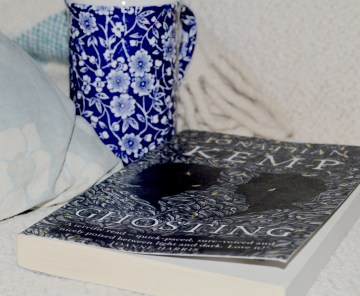
Haunted by the Past: a review of Jonathan Kemp’s ‘Ghosting’


How do we live with the spectres of the past: lost loves, lost children, years wasted in bitterness and regret? And, in living with lament, do we become ghosts ourselves?


This is a tale of how we haunt ourselves, how the torment of the past can desiccate us. It’s also a tale of unlocking self-imposed shackles.


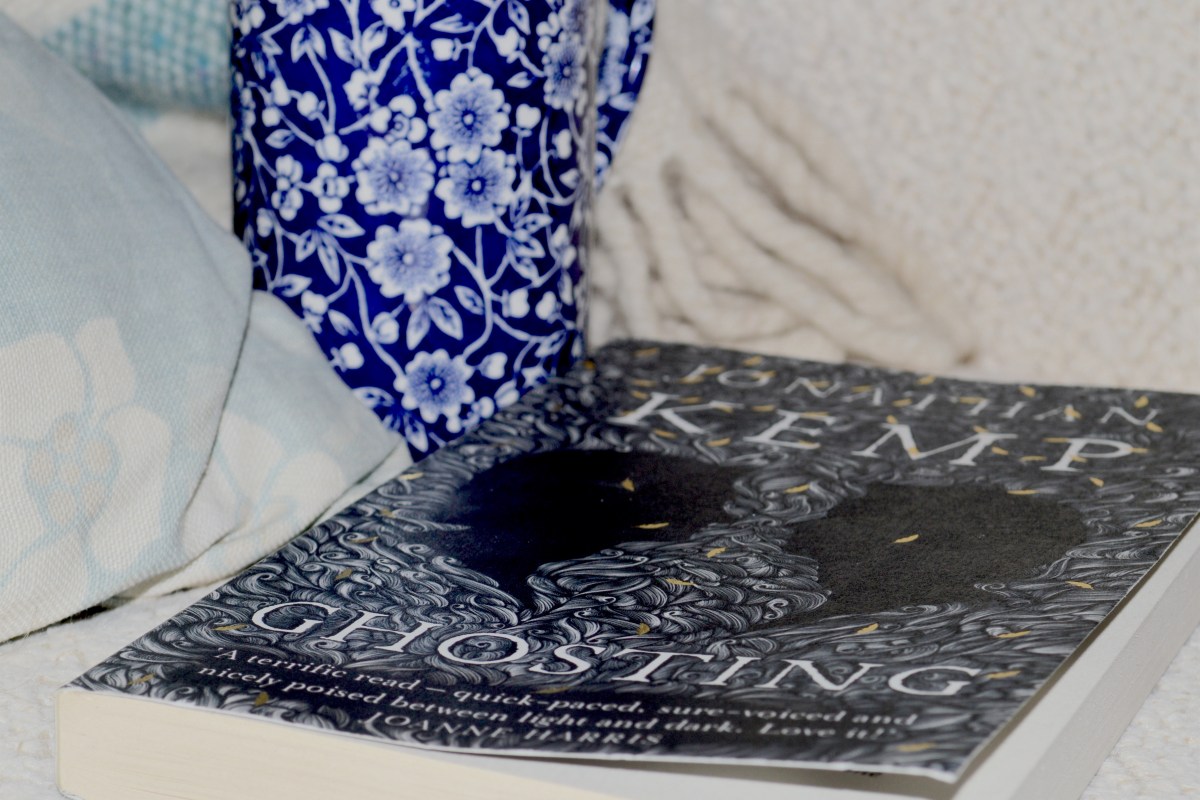
Grace’s long-dead husband, Pete, has always been the dark shadow at her side, captured Jonathan Kemp ghosting revieweternally in her memories of his initial love for her, and of his physical and emotional abuse; now, she believes he’s reappeared in the flesh.


Looking back, to four decades earlier, we hear: ‘…with each blow, her love for him diminished. She would say she loved him but she felt it less and less.’


Jonathan Kemp has a talent for evoking a moment through a single image. Grace recalls: ‘pegging out their bedsheets for the first time and feeling as if she was pitching a flag on the summit of her happiness; declaring her joy to the world.’ He shows us not only a husband hated, but adored, and therein lies a tangled web.


There are memories too of a teenage daughter, who was lost emotionally to Grace long before her fatal drug overdose. Jonathan Kemp shows us the power of grief to place us out of joint with the world, disoriented, a form of madness, memories clanging a jarring bell.


Grace is adrift, failing to cope with the pain of the past. Her strategy of denial and containment has left her brittle. She’s barely breathing when we meet first meet her: a ghost of the self she once was.


Her cage is uniquely her own, but we all have our cages, inhabited by lovers long-ago-kissed, friends discarded, family members lost to us. They are the patterns woven into our personal tapestry, folded and put away, for what we avoid looking at we think we may forget.


Grace thinks: ‘What happens to all the pain you refuse to feel? Does the body store it perhaps, for a future date?’


I defy your heart not to ache for Grace and, in reading of her grief, to ache for yourself, for we are all haunted by the past, and by the transience of this life.


As Grace ponders: ‘Life happened. Only I feel like it happened without me, and I want it back so I can do it differently.’


As in The Yellow Wallpaper, by Charlotte Perkins Gilman, Grace sees a woman crawling through the wall, trying to escape: a metaphor for her own effort to be free of what constrains her.


Kemp leads us through the female mind with insight, dark humour picking its way through dark themes. Grace wonders at what point her frustration will rob her of self-control. She recalls a friend of her mother’s who would carry a china saucer wrapped in a tea towel in her handbag, alongside a small hammer, ready for extraction in emergencies, to allow her to vent her anger. It must ‘go’ somewhere, or she’ll descend into madness, so she fears.


She pictures her thoughts as fishes, swimming inside the bowl of her skull; pictures herself ‘casting a line to catch them.’


At last, the mysterious apparition turns out to be Luke, whose youthful vitality and daring helps bring Grace back to life. While she locks her torment away, Luke uses performance art to purge his. Through their growing friendship, she realises that only she can release herself from grief’s burden.


Grace is: ‘becoming herself, and daily casting aside that fictitious self that people assume like a garment in which to appear before the world.’


ghosting jonathan kemp  reviewShe accepts life’s chaos, knowing ‘with a knowledge that somehow sets her free, all there is to know about life, which, nothing.’


The tale ends with Grace leaving behind her past, dropping her phone into the bin. She no longer feels the need for safe shelter. She’s ready to step into her future.


Grace notes, on visiting an art exhibition, that art is ‘a way of seeing’ and ‘a process’, ‘more than a product to be sold’. Some stories are told to enlighten us, to shine a small flame in the darkness of our haphazard ramblings, to show us the way. Kemp’s story is one such, urging us to recognise the pain we carry with us and to set it free. The pages are ‘a product to be sold’ but they are also a personal message, of encouragement to heal, and step into our own tomorrows.


Jonathan Kemp 26 Ghosting London Triptych

Jonathan Kemp teaches creative writing and comparative literature at Birkbeck College, London. His first novel, London Triptych won the Authors’ Club Best First Novel Award in 2011 and was shortlisted for the Polari Prize and the Green Carnation Prize. He is also the author of a collection of short stories, 26.


Screen Shot 2016-02-23 at 11.20.45“There is a deceptively relaxed quality to TWENTYSIXKemp’s writing that is disarming, bewitching and, to be honest, more than a little sexy… As a writer, Jonathan is somewhat akin to the Pied Piper if only because there is something magical you cannot help but follow.”
– Christopher Bryant, Polari Magazine.


Adrea Kore: Hand of a Stranger

Within the rich, dark sea of tales, there are midnight words whispered betwen lovers. There are secrets, concealed and revealed. There are a thousand versions of yourself, and a thousand versions of desire.Adrea Kore - hand of a stranger flash fiction

In that fantasy realm, we may relinquish control, or we may enfold and possess. We may flee, while wishing to be found.

There, lush and sensual, raw and red, teasing and taunting and tantalizing, are the words of Adrea Kore.

Hand of a Stranger is a flash-fiction piece: a fantasy about desirability, explored through the themes of pursuit and capture. Its melodies are haunting, and its rhythms those of anticipation.


‘Let the shimmer of my stockings under streetlights be your lure. I hear and don’t hear your stealth-clad footsteps, trailing me. Block after block, past sordid bars and shut-eyed houses. I want not to know the dark lust you harbour at the glimpse of suspenders through my skirt-slit. Swishing so close to my sex, where you want your cock to be.’


Adrea Kore - Hand of a StrangerTo hear the full (6 minute) audio recording of this velvet fantasy, inspired by Film Noire, and to learn more about intent in erotic fiction, visit Adrea’s website.


Adrea’s poetry and short fiction appears in the following editions:

lickedsmall  51swETCdl-L._SX331_BO1,204,203,200_ 51UQ0Yh006L._SX322_BO1,204,203,200_ 41kVo0tFLqL._SX328_BO1,204,203,200_


In the words of Adrea Kore:


‘Erotica writes into those areas of the human sexual psyche and behaviour that some other genres gloss over or shy away from.

Erotica reveals the links between our inner psychological desires, our motivations and our sexual actions.

Erotica asks complex questions about consent, personal limits and relationships. And it doesn’t just ask these questions of the characters. It asks them of the reader, also.

This is why I am drawn to writing in the erotic genre. It’s why I feel proud of my craft. Sexuality is such a vital part of the map of the human psyche. Sexuality reveals so much of ourselves.’

 read more in Adrea’s Earthing Eros: The Makings of Erotica ii

Adrea Kore


Peep Show: a review

The exhibitionist in us wants others to disapprove, as well as to admire, for it is in this that we find the tantalising ‘edge’.

Wilmington, North Carolina, 1950 by Elliot Erwitt
Photograph by Elliot Erwitt (1950)

Here is the line in the sand, and here we are, stepping over it.
Here is my body; here is my lust.
See it in my fingers and in my eyes, and in my quickening breath.
Look away if you don’t like what you see…
Except that I know you won’t.

Peep ShowPeep Show: Tales of Voyeurs and Exhibitionists, edited by the Queen of Erotica, Rachel Kramer Bussel, is a gem of an anthology: each story perfect in its own right, original and well-crafted, surveying the paired delights of voyeurism and exhibitionism.

‘Clean and Pretty’, by Donna George Storey, is a sensual masterpiece, displaying the very paradox at the heart of the collection: that the essence of our desire to be watched, to ignite the flame of arousal in others, is based not just on the notion of seeking admiration but also on a yearning to defy boundaries, to defy the watcher’s approval, to defy commonly-held canons of ‘decency’.

Bruce Webber
Photography by Bruce Webber

Every act of exhibitionism is a performance, as in Jennifer Peters’ gloriously bold ‘People in Glass Hotels’, and in Lolita Lopez’s ‘Indecent’.

Of course, the coin’s reverse is all the more potent when illicit. Forbidden pleasures are, inevitably, the sweetest, as we see in Elizabeth Coldwell’s tantalising ‘Audience Participation’, and in Nobilis Reed’s cleverly rendered and multi-threaded ‘Glass’: both extolling the joy of watching, uninvited.

Hans Mauli
Photograph by Hans Mauli

Rachel KB’s own contribution to this treasure trove, ‘I’ve Only Got Eyes For You’, and Angela Caperton’s ‘Calendar Girl’ end the collection on a note lavender-sweet and dumpling-soft, showing that exhibitionism is not confined to the shadow-world. Every one of us can enjoy the act of display, and there are so many ways in which to do so, to the enrichment of our self-esteem, while feeding a secret desire to shock.

Perhaps the jewel in the crown is L.A. Mistral’s exploration of the relationship between the knowing performer, and the open watcher, writing in ‘The Theory of Orchids’: ‘The more we cherish something with our eyes, the more it flourishes. Our attention changes both who we are and what we look at. Our watching changes everything.’

Manuel Álvarez Bravo, Maniquí tapado (Mannequin covered), 1931
Photograph by Manuel Alvarez Bravo (1931)

We read for entertainment, but also to know ourselves better, to find an echo within the pages, and to witness parallel universes. Knowledge of each ‘other life’ opens a door within our own.

Mannequins, E1 by John Claridge (1968)
Photograph by John Claridge (1968)

Reading, of course, is an act of voyeurism in itself, and this anthology, by its very nature, encourages us to embrace the process.

Read, and watch, and enjoy.

(For more voyeuristic delights, you may like to visit my Author Page on Amazon to see where my pen has been tickling…)

The Journey of Love

My dear friend David (aka Grumpy Writer) presents a three poem journey of love: the pleasure; the passion; and the pain.

David ‘was born before there were such things as televisions, electricity or the written word. He attended an all-girl comprehensive school (until he failed the medical) and david chandler grumpy writer writer's grump dr.whodini writer authorcurrently resides on a small asparagus plantation in Fiji with his two cats and an invisible ostrich called Gerald. Well, the bit about the cats is true!’

You may like to find him on Twitter


The PLEASURE

What could be the ending to this fine September day?

The answer is still hidden and I really cannot say.

Perhaps to hold me close to you, take me in your arms.

Whisper that you trust me, that you know I’ll do no harm.


Gently lift your finger and wipe away the tear

of happiness within my eyes each time that you are near.


To guarantee a lifetime making sure your life rings true.

To show you that from now on there’ll be no more hurt for you.


To be as one, no matter what the world outside us holds.

For we are more than friends or lovers, we are entwined souls.


Perhaps to marry and confirm our love to one and all.

And each year to renew that vow and from the rooftops call.


To hold our newborn baby girl. Our own sweet child, as we

swear to cherish this new life. Love her unreservedly.


And as the years grow shorter and we’re frail and dim of eye.

To sit together in the park; watch young lovers walk on by.


And not be scared to say goodbye, when we take that final breath.

Our love it has no barriers. It transcends even death.


So what could be the ending to this fine September day?

To tell me that you love me, that you’ll never walk away.


The PASSION

‘Pull me close,’ she said to me.

‘Feel my warm embrace.

Closer, closer darling.

Your breath upon my face.’


‘Hold me tight,’ my lover cried.

‘Let me hold you too.

Tighter, tighter darling.

All I want is you’.


‘A gentle touch,’ she smiled at me.

Her hand upon my skin.

‘Touch me, touch me darling

And sense the warmth within.’


‘Love me now,’ she whispered.

‘Our feelings we shan’t hide.

Love me, take me, fuck me.

I want you deep inside.’


‘Look at me,’ she told me.

‘Look into my eyes.

I know now that you love me

and that it isn’t lies.’


‘Sleep with me,’ she murmured.

‘Close your eyes and sleep.

For we are here together,

there is no need to weep.’


‘Live with me,’ she asked me.

‘Live our lives as one.

Jus me and you; a life anew.

A new day has begun.’


The PAIN

This may be the last poem

that I’ll ever write to you.

This may be the final time

I can say I love you.


This may be the last poem

that tells of how I feel.

This may be the final time

I voice these feelings, real.


I may never tell you

how dim the sun did shine

whenever I was with you;

Whenever you were mine.


I may never feel again

the warmth, the joy, the care.

I may never see again

the sea breeze through your hair.


This cannot change the thoughts I have.

This will not hide what’s real.

What we shared was special.

It’s something I still feel.


This may be the last poem

The last of all my days.

For with you, you take all my love

as we go our separate ways.


Take care my friend I love you

and I will always care.

Where I go you’re beside me…


…although you won’t be there.


Big Brain Erotica: Best Reads of 2015

My sincere thanks to the hugely knowledgeable, insightful and unfailingly entertaining Terrance Aldon Shaw of ‘Erotica for the Big Brain‘ (in my opinion, the very best review site for erotic fiction) for including ‘The Gentlemen’s Club‘ among his ‘best reads of 2015’.

Gentlemens Club 2

I’m in excellent company, alongside:

Twentysix (Jonarthan Kemp)Twentysix (Jonathan Kemp), with its ‘wild surfeit of language’ and ‘sumptuous banquet of experience’;
the ‘bold, surprising and sometimes shocking’ Addictive Desires (Big Ed Maggusun); andAddictive Desires 002
Katie in Love (Thurlow)Katie in Love (Chloe Thurlow), beautiful in its melancholy,  ‘reflective, sensuous and cerebral’.

 
Libidinous Zombie (ed. Rose Caraway), ‘skillfully melding horror, erotica, comic sensibility and the macabre’ and featuring some of the leading writers in the genre:

Malin Libidinous Zombie 2James, Remittance Girl, Rose CarawayTamsin Flowers, Jade A Waters, Raziel Moore, Allen Dusk and Janine Ashbless

(see here for my own review)


Generation Game 2


Generation Game (Secret Narrative), an artful exploration of mature desire

 
One Night Only 2One Night Only: Erotic Encounters (ed. Violet Blue), a steamy anthology boasting such literary legends as Rachel Kramer Bussel and Donna George Storey


The ‘intriguingly original and soulful’ Aphrodite OverboardAphrodite Overboard (Raiment) (Richard V. Raiment)


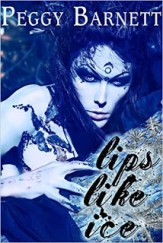
Lips Like Ice (Peggy Barnett), ‘which contains elements of classic feminist science fiction in the best tradition of Ursula K. Le Guin and Margaret Atwood’

Lips Like Ice 2


The ‘genre-bending, thought-provoking and heart-warming’ Counsel of the Wicked (Rebel Mage: Book 1) (ElizabethCounsel of the Wicked (Schechter) Schechter)


and, in praise of the enduring, voluptuous, intoxicating delight of Angela Carter’s Bloody Chamber, Bloody Chamber (Angela Carter)a nomination for the release of the  75th Anniversary Edition


Sex and horror: dark pleasures of fear and desire

Horror is seductive.

It’s like the promise of sex, inviting us in.
It pulls at your guts and prickles your skin, and works icy fingers through your blood.
It demands a visceral reaction.

Carmilla1How delicious is the sensation of fear, an echo of carnal pleasure. Like sexual desire, it titillates not only the mind but the senses. As we know, a good ‘scare’ is a wonderful aphrodisiac.

‘Horror’, as a genre, has a great deal of the erotic about it. It crooks its finger to entice you.

Here is the most intimate of relations between author and reader. You bring yourself to the page not only mentally, but physically. ‘Come closer,’ whispers the writer, ‘let me crawl inside you.’ In reading erotica, you beg ‘seduce me’. With horror, it’s ‘frighten me’.

And anticipation is all. You lick your lips, waiting for the ‘forbidden’, or to be ‘devoured’. You keep running, but you know you want to be caught.

Reading tales of horror is a masochistic act. It’s hard to say where pain ends and pleasure begins in those dangerous undercurrents, on the razor edge between light and dark.

The pursuit of sex, on the page and screen, is regularly equated with danger: be careful of where you go, and who with: they could be a ‘monster’ in disguise. It’s a recurring theme in horror films: the werewolf teen in ‘Ginger Snaps’ (2000); the alien creature in ‘The Faculty’ (1998); and the hairy beast within, as seen in ‘The Company of Wolves’ (1984) and ‘Red Riding Hood’ (2011). Appearances aren’t to be trusted.

In reading erotic fiction, we accept the apple of sexual self-knowledge. In biting its flesh, we may discover that which we wish to refute: dark fantasies of pleasure and pain, of voluptuous abandon, of wild promiscuity, of being ‘taken’ against our will. Between the pages, there are no bounds on sexuality, all is rendered ‘permissible’ by the veil of fiction.

Harking back to 19th century Gothic fiction, ghosts, family curses, vampyres, demons and superstitions dominated. An atmosphere of brooding unease was vital: one of mystery, pushing the reader towards their own state of ‘madness’.

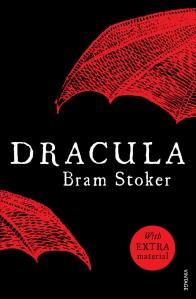
The most famous example is Bram Stoker’s ‘Dracula’: darkly malevolent and laced with eroticism. Think of Jonathan Harker’s non-consensual ‘blood rape’ at the hands of the three vampyre women in the Count’s prison-castle.

dracula-book-cover He recalls, with shame and fascination, his temptation to submit: ‘There was a deliberate voluptuousness which was both thrilling and repulsive, and as she arched her neck she actually licked her lips like an animal, till I could see in the moonlight the moisture shining on the scarlet lips and on the red tongue as it lapped the white sharp teeth. Lower and lower went her head as the lips went below the range of my mouth and chin and seemed to fasten on my throat. I could feel the soft, shivering touch of the lips on the supersensitive skin of my throat, and the hard dents of two sharp teeth, just touching and pausing there. I closed my eyes in a languorous ecstasy and waited – waited with beating heart.’

There is the sensual portrayal of Lucy, most acutely rendered in her ‘undead’ state, and the slow seduction of Mina by the Count: a domineering, unfathomable stranger. The story is filled with references (veiled or explicit) to eyes blazing with desire, to blood, to submission, to carmilladeath, to longing, to violence, to the devouring of flesh, and of course, to biting and sucking!

What other story, before or since, has so perfectly combined the luxurious pleasure of horror with eroticism?

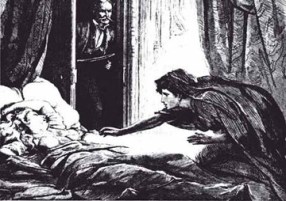
For some, it is Sheridan le Fanu’s ‘Carmilla’ (written in 1872). It boasts similarly sensual passages, which hint at more than is explicitly written. Laura describes perturbing (rather orgasmic) sensations in the night, which we link to the presence of female vampyre Carmilla, coming to her room: ‘My heart beat faster and faster, my breathing rose and fell rapidly and… [it] turned into a dreadful convulsion, in which my senses left me, and I became unconscious.’

Carmilla opens a door to young Laura, awakening her to awareness of her sexuality. Once open, the door cannot be shut. Even when Carmilla has been staked and dispatched, Laura is haunted by memories.

In both stories, female sexuality is equated with ‘vampyric-bloodlust’: wanton, uncontrollable, and beyond civilised norms. It is as if, in succumbing to such a woman (or women in Harker’s case), we forfeit our very life-force.

In keeping with the age in which the tales were written, sexual pleasure is to be feared and resisted rather than welcomed. However, what danger can be more alluring than that of casting aside propriety and embracing abandoned, illicit sexual appetite? It’s little wonder that Stoker’s ‘Dracula’ and all its descendants have enjoyed so many decades of popularity. The stories can be viewed as more than horror. They explore awakening: awareness of self as a sexual being; and understanding of elements previously hidden. Within the velvet embrace of sexual arousal and heightened sensation, a cloak of ‘propriety’ is lifted, allowing us a glimpse of self-knowledge.

As Jonathan Harker admits, afraid of what awaits him at the hands of the trio of vampyre-seductresses: ‘I doubt; I fear; I think strange things, which I dare not confess to my own soul.’

The monsters and supernatural seducers of ‘horror’ cannot be resisted; weCarmilla cover are forced to succumb. Here, if nowhere else, we may embrace dual-edged fantasies.

As Stoker’s Dracula urges, inviting us further into the pages, and into the realm of the forbidden: ‘Enter freely and of your own free will!’


Bibliography
Sheridan Le Fanu: ‘Carmilla’ – a short story from ‘In a Glass Darkly’ (1872)
Bram Stoker: ‘Dracula’ (1897)

For a peek at my darkly erotic pen, visit my Amazon Page.


Thank you to the Brit Babes site for first hosting this article.

Do step over to take a browse of the Babes’ carnal delights…


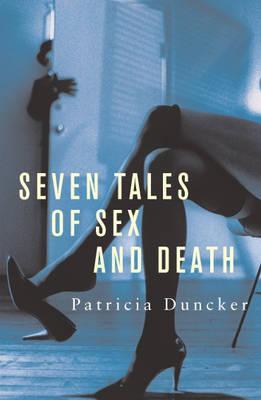
Seven Tales of Sex and Death, by Patricia Duncker: a review


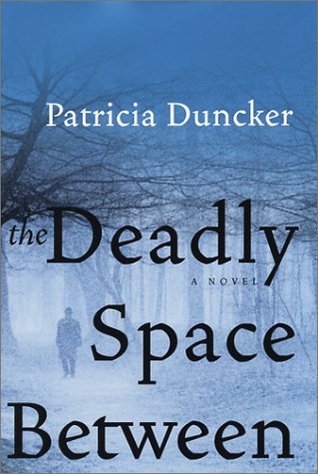
 Hallucinating Foucault : Patricia Duncker Having adored Patricia’s ‘Hallucinating Foucault’ (1996) and enjoyed ‘The Deadly Space Between: A Novel’ (2002), I felt compelled to try this collection of her The Deadly Space Between: Patricia Duncker - a reviewshort stories.

The author writes that her intention was to ‘disturb and provoke’. To this end, I believe she is partially successful, since two of the tales, particularly, continue to haunt me.

Moreover, I’m left asking myself why, which I’m sure is what Ms. Duncker would be pleased to hear.

They highlight the erotic relationship between violence and sex, yet neither tale is arousing in the traditional sense, more inspiring horror and revulsion, and yet… there is something.
Patricia Duncker: seven tales of sex and death review‘Stalker’ is the most violent, gruesomely detailed of the seven tales, yet also manages to build a chilling atmosphere of anticipation. Reader beware.

‘Sophia Walters Shaw’ left me similarly disquieted.  Painting an alternative, yet highly recognisable dystopian future, it focuses on the dark underbelly of the sex industry and the work of hired assassins.

The last story, ‘My Emphasis’, seems an ill-fit for the theme, but that it centres on the ‘heroine’ being obliged to maintain the pretence of being a victim of domestic violence. The tale is perhaps the most well-crafted of all, engaging us in the behaviour of a great many characters and drawing out the humour of misunderstandings with a light touch – but it does not move the darker side of me.

Patricia’s ‘Seven Tales of Sex and Death’ (2004) left me wanting more: more sex, more violence, more death. These are such rich seams, enticing us to explore further: to pick apart their interwoven threads and unknot their secrets: shadowy avenues which she plumbed with such heartfelt insight in ‘Hallucinating Foucault’.


For a taste of my own writing in this genre, visit my Amazon page. 


Macabre Folk Tales

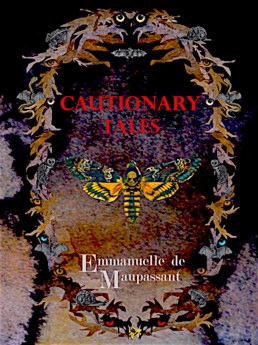
cautionary-tales-moth-cover-for-kindleFrom Cautionary Talesthis story is inspired by the folk customs and superstitions of Russia and Eastern Europe.

Against Murder

The Likho is an evil one-eyed fiend from the forest, known for its fondness for human flesh.

A moment’s temptation takes us on a wrong path. On that path may lurk foul fiends.

A dairy farmer was once married to a woman so cantankerous and contrary that there was no living with her. If he asked her to get up early and help him milk the cows, she’d lie in bed until noon. If he requested pancakes, she’d be sure to cook beetroot soup. If he dared suggest that she muck out the cowshed, he’d find a pile of dung in his boots.

In addition, she found constant fault with his appearance and behaviour: his breath reeked of garlic and his armpits of onions; his back was an eruption of boils; he always had grease in his beard and cabbage between his teeth; and he slurped food like an animal. One night, she went too far, scoffing that he was useless between the sheets, since no children had ever been conceived there. She complained that she’d rather share her bed with a pig.

Bolder titles - eyes at window cover TalesDriven beyond all patience, he took a pillow and held it over her head until her arms flailed no more. It took but a minute and, immediately, a blissful hush settled on the house. He wondered why he’d never thought of it before.

Of course, when evil thoughts and deeds are abroad, they attract certain creatures and crawlers, as we restless spirits know all too well. Man’s wicked folly draws them close.

A malevolent forest demon, the Likho, sniffed the scent of violence and came creeping from its winter lair, bare feet stepping steadily through the snow. Dark lips contorted in a grin of anticipation, revealing yellow teeth and blackened tongue.

The fiend headed into the village and, as was its wont, paused to check upon the hens. It stroked those sitting on an uneven number of eggs, its filthy talons tickling where it might have rent asunder. Claws trailing over fences and gates, it made its inevitable path, drawn towards the stench of ill deeds.

Finally, the beast arrived at the house of the dairyman. It peeked through the shutters with its one eye and there, by the morning light, watched as the husband laid out his wife on the table, so that her feet faced the door, as was the custom.

The dairyman tucked her nightgown round her toes and opened the window a little, despite the nip of frosty air.

‘Off you go,’ he declared, ‘Fly away elsewhere.’

On the beams above the warm stove, the ghost of the murdered woman sat grumpily, Cautionary Tales  Emmanuelle de Maupassant - We are the shiver on your uneasy flesh, The creep of the unknown on your skinglaring down at her husband, quite as she had done in life.

So it is that we, the unhappily departed, are often obliged to haunt the places of our damnable demise. Little does man know of this shadowed realm, between light and dark, and the torments that bind us so closely to the world where once we drew breath.

Having dispatched his wife, the dairyman’s thoughts turned to the shapely widow next door. With a spring in his step, he donned his best shirt and hat, and sauntered round to see her, intending that they be married as soon as the burial rites were completed.

The widow was flattered by the alacrity of his proposal, considering that breath had barely left the wife’s body, and accepted gladly. So eager was the hussy to take the woman’s place that she suggested moving in straight away – on the pretext of cleaning and cooking for him in his time of distress.

The Likho had waited until the man walked down the path and had slithered in through the open window, surveying the fresh corpse and the ghost, still hunched above and scowling.

‘Ha!’ cackled the fiend, ‘I expect you’d like revenge on that husband of yours. Murder shouldn’t go unpunished, and no creature enjoys delivering chastisement as much as I. What about giving him a taste of his own medicine? If you’d be so kind as to lend me your body, I’ll set him dancing to my tune.’

Emmanuelle de Maupassant Crook Your Finger Quote from Cautionary TalesThe wife’s spectre grimaced and nodded, at which the wicked Likho stripped off the nightgown, then the dead woman’s pliant skin, peeling back the flaccid folds. These it left in a slack heap.

It gobbled her flesh and sucked the bones clean. These it hid behind the stove, before inserting itself inside the empty, wrinkled carcass, taking the former position of the corpse. Its fat tongue swiped the last juices from around its lips.

Cautionary Tales Emmanuelle de Maupassant manWhen the husband returned home, all was as it had been; there was not a speck of blood to be seen, although the strangest smell of rotten eggs lingered.

The neighbours came to pay their respects and offer condolences, and the comely widow served pancakes and pirozhki dumplings to the mourners. A few eyes rolled; it required no fortune telling to see which way the wind was blowing. However, life goes on, and the villagers agreed that the new couple were a good match. His first wife had been a harridan, with few good words for anyone; none would miss her.

Once the guests had left, it wasn’t long before the man and the floozy tumbled into bed, tittering and fondling. So intent were they that neither noticed the corpse sitting up to watch them.

After some minutes, the Likho called out, ‘That hardly seems polite. I’ve only been dead a few hours.’

The widow screamed and the dairyman jumped up so quickly that his head cracked on the
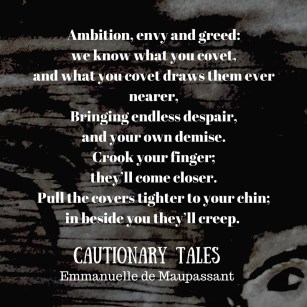
Emmanuelle de Maupassant quote from Cautionary Tales Ambition, envy and greed_ we know what you covet, and what you covet draws ceiling. Both assumed that the corpse had returned to life to berate them.

Kneeling on the floor, the man pleaded with his departed wife for forgiveness. At this, the widow raised an eyebrow. She’d been ignorant of bedding a murderer, although the news was no real surprise.

The Likho raised the corpse’s mouth in a leer, replying, ‘Not to worry. I’ll join you. I’m sure there’s room for three. My feet are cold, so I’d appreciate you warming them for me.’

With that, the devilish creature hopped into bed and patted the covers, indicating that the husband should clamber in. The fiend lay between the two, a cold hand placed on the thigh of each. It then went to sleep, snoring loudly through the night, while the pair lay awake, too horrified to move or speak. The strumpet could hardly deny that she’d climbed into her neighbour’s bed more quickly than etiquette allowed, and now she was facing the consequences.

In the morning, the corpse sat at the table and declared to the widow, ‘I’m feeling quite peckish. I suppose you can cook? A plate of draniki if you please and look sharp about it.’

Too terrified to argue, the woman began her task. Each draniki she set down was gobbled in a single gulp, replaced by the demand for more. The Likho rapped the husband’s knuckles when he tried to take one, telling him to wait until it’d had its fill. Eventually, every potato in the house had been eaten.

‘I’m still rather hungry,’ admitted the corpse. ‘Why don’t you go and shoot some rabbits? We might have a stew.’ It inclined its head towards the door, to indicate that the husband had better get a move on.

As soon as he had departed, the Likho sat back in the chair contentedly. ‘I suggest that you milk the cows while he’s gone and then clean the house,’ the corpse commanded.
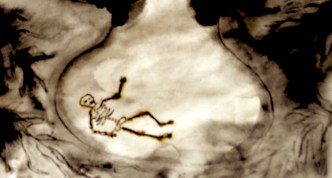
skeleton bAll day, the widow tended to the animals, scrubbed and polished, until she was ready to swoon. As soon as the Likho saw this, it clapped its hands in glee and split the woman neatly in two with a flick of its talons.

Such are the rewards of those who crave illicit pleasure and who care not how their comforts are attained. A moment’s temptation takes us on a wrong path, on which may lurk foul fiends.

As before, it feasted on the tender flesh and licked the bones clean. The skin it put to one side and, casting off the wrinkled wrapper of the murdered wife, slipped inside the new.

The demon tossed the bedraggled old remnants behind the stove, with all the bones, and gave itself a shake, adjusting to its new costume.

It winked at the wife’s ghost, still perched overhead.

‘Don’t worry. I’ve not forgotten him!’ the fiend assured her.

It preferred the shape of this skin, which was smoother and altogether more plump and comfortable. More fun was to be had before it had finished.

When the man returned (without any rabbits, since all had eluded his gun and traps) he was delighted to see that the animated corpse of his old wife had departed and that his new ladylove appeared in good spirits.

‘My darling, I persuaded her to leave,’ cooed the demon. ‘Now, come and give me a kiss.’

The Likho locked him in a firm embrace and wrestled him onto the bed.

‘Goodness me,’ exclaimed the dairyman. ‘Gentle my love. You’re like a bear tonight. You’ll crush the breath out of me.’

The beast gave a girlish giggle. ‘If I’m a bear then you must be my honey,’ it simpered.hand and face
It then squeezed the man so tightly that he fell into a faint. In a trice, he was rent down the middle, becoming a tasty supper for the evil creature. Once the flesh had been gobbled, the Likho stuffed the skin and bones behind the stove and retired to bed.

At dawn, the demon sprang awake, ready to see what the day might bring. By the door, it noticed a basket of mushrooms, brought from the forest by the dairyman the day before. With a flip of the pan, the fiend fried up the delicacies, serving them with a dollop of sour cream and swallowing them utterly in three great gulps.

So self-satisfied was the beast that it hadn’t noticed the basket brimming only with poisonous varieties: chosen by the dairyman in hope of finally sending his corpse wife into the hereafter.

The creature clutched its stomach, torn by a churning ache. Such was its torment that the Likho flung off the widow’s skin and bolted out of the door, back to the forest.

It left behind an empty house, but for the graveyard behind the stove and the shrivelled casing of the floozy, cast onto the floor.

As for the wife’s disgruntled spirit, it had found the past days’ events more than agreeable Emmanuelle de Maupassant Cautionary Tales snowy footprintsand was content, at last, to leave.


Visit my Amazon page for more.cautionary-tales-moth-cover-for-kindle
 

Battle-born: Feisty Females in Fiction

Looking for female characters with a brain? With attitude? With something to say? Are the novels you’re reading measuring up?


Romance addicts might be hoping that a hunky man is waiting at the end of the rainbow, but isn’t it great to feel that there’s more on a woman’s mind than just a wedding band? She may be driven by the pursuit of love, but let’s also see her achieve self-love (and self-knowledge) along the way.


We can do worse than encounter Austen’s JENNIFER EHLE - Elizabeth Bennett - feisty females in fiction Elizabeth Bennet (Pride and Prejudice) who oozes independence, wit and pragmatism. She bags Darcy in the end, but not until he’s gone the extra mile to prove himself worthy of her. Most satisfyingly, she learns to better understand her own foibles in the meantime.


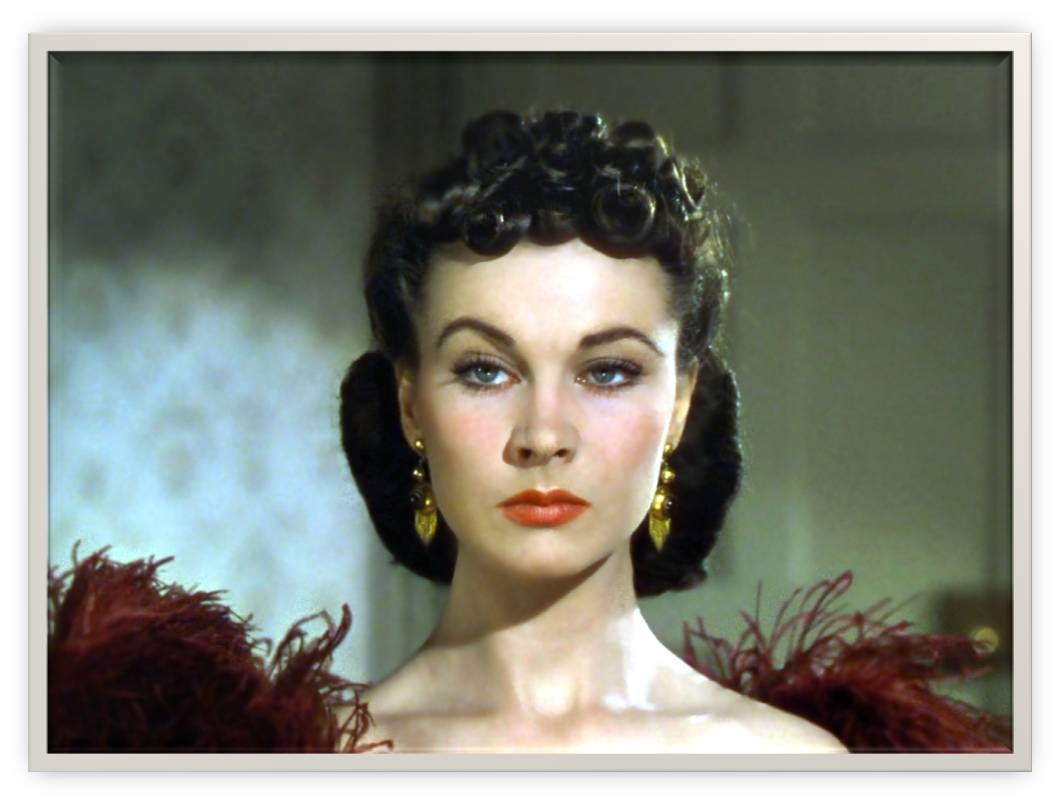
vivien-leigh - scarlett-oharaIt was Southern Belle Scarlett O’Hara (Gone With The Wind) and Vanity Fair’s Becky Sharp who first lit my fire. Equally conceited and ambitious, they thought nothing of defying convention. Here were women who might have something to teach me. While Scarlett refuses to allow roguish Rhett Butler, or the inconvenience of civil war, to interfere with her determination to enjoy life, the flirtatious Miss Sharp manipulates her way up the social ladder. Both endure trials and the humiliation of plans thwarted, but retain their inner spark, finding their own Becky Sharp Vanity Fair strong women in  literature version of contentment by the closing chapters. Their selfish acts are allowed to stand, without excuse or pardon, leaving us to judge as we may.


As a teenager, I remember blushing at Defoe’s sexually effusive Moll Flanders and being repulsed at her casting off of various children like so much unnecessary baggage, but I also delighted at her social scheming, her sense of Moll Flanders - Alex Kingston - strong women in fiction adventure, her impervious determination and her high spirits. She was infinitely preferable to the melancholy ‘victims’ and infuriating ‘saints’ of Hardy and Dickens.


Jane Eyre was no Moll, lacking even a speck of glamour, but she hooked Rochester with her own brand of quiet confidence and intelligence, scorning his perceived right to ‘command’ her. She declares: ‘superiority depends on the use made of time and experience’. I couldn’t help cheering her as she withstood theJane Eyre - Bronte - strong women in fiction familiar inventory of hardships, relying on her own powers of endurance to prevail.


Intent on showing that there is more to life than the frivolities of a romantic dalliance, Max Beerbohm presents femme fatale Zuleika - Max BeerbohmZuleika Dobson. She gains entrance to the privileged, all-male domain of Oxford University, whose students become uniformly infatuated by her beauty. Then, the ‘sillies’, forlorn at her refusal to accept a husband, make a pact of suicide, drowning in the river to ‘prove’ their devotion. The loss is not great; the academics barely notice the absence of the young men and impervious Zuleika heads to Cambridge


Of course, female protagonists don’t need to be young, sexy or beautiful to capture our attention – and their stories can exist outside of the realm of romance. Think of Agatha Christie’s outwardly demure Miss Marple: quietly Agatha Christie - Miss Marple - feisty strong women in fiction determined on sniffing out killers, as she knits yet another pair of baby booties. As one police inspector puts it, she may be ‘fluffy and dithery in appearance but, inwardly, she’s as sharp and shrewd as they make them’. Of herself, she remarks: ‘Inertia does not suit me and never has’.


Fellow detective Mary Russell, written by Laurie R King, shows the legendary Mary Russell - Laurie R King Sherlock how it’s done, not only working beside him but often eclipsing Holmes. Over a series of novels, Mary grows in stature and experience, providing an intriguing, and often amusing, foil to Conan Doyle’s snooty sleuth. Go Mary!


In heart-wrenching contrast, the bleak yet compulsive Scandi-Noir Millennium Trilogy has given us Lisbeth Salander. Having read the books in my 40s, I wonder what I would have made of the vengeful violence meted out by this fiercely ‘anti-social’ heroine in my teenage years. Brutality against women permeates the lisbeth salander - strong women in fiction - Millennium Trilogy - Larssonstory at all levels, to a degree that obliges us to accept the ‘justice’ of Lisbeth’s actions. Although she lives firmly outside of conventions, she retains a need for love and companionship. Infinitely complex, she is one of most compelling female characters of our modern age, exemplifying resilience in the face of adversity.


The Song of Ice and Fire series (brought to the screen as our beloved Game of Thrones) presents a dazzling host of powerful female characters: resolute Arya and her mother, Catelyn Stark, female warriors Ygritte and Brienne of Tarth, cunning Margaery Tyrell Game of Thrones  Song of Ice and Fire  Mother of Dragons Strong women in fiction and her grandmother, Melisandre and Cersei Lannister, and the brave and noble Mother of Dragons, Daenerys Targaryen: a chocolate box of infinite satisfaction. In terms of ‘role models’ there’s something to appeal to every woman, of every age.


Young Adult fiction also offers us some corkers: His Dark Materials’ Lyra, Katniss Everdeen from The Hunger Games, Hermione Granger of Harry Potter fame and Divergent’s Tris. They celebrate not only bravery but compassion and intellect and, most importantly, assertion of individuality.


My vote is for women who whisper encouragement long after I’ve closed the pages, urging me to be strong and self-reliant, marching to my own drum.


Raise your ‘bravo’ by adding your feisty favourites below…


(For more feisty females, you may like to visit my Author Page on Amazon)